Exchange of land between SpaceX and federal refuge in Cameron County OK’d despite conservationists’ objections
This article first appeared on The Texas Tribune. The Texas Tribune is a nonprofit, nonpartisan media organization that informs Texans — and engages with them — about public policy, politics, government and statewide issues.
Exchange of land between SpaceX and federal refuge in Texas OK’d despite conservationists’ objections
McALLEN — A federal judge ruled against environmental and wildlife conservation groups trying to prevent a land exchange between SpaceX and the U.S. Fish and Wildlife Service in South Texas.
U.S. District Judge Fernando Rodriguez Jr. denied a request for a preliminary injunction filed by the conservation groups to prevent U.S. Fish and Wildlife from exchanging 715 acres of land in a wildlife refuge for 683 acres of private land that is adjacent to another refuge.
The government and SpaceX executed the land swap agreement on Sept. 1 and expect to transfer the title on Sept. 22.
The conservation groups — the Center for Biological Diversity, Save RGV, the Carrizo/Comecrudo Nation of Texas, and the South Texas Environmental Justice Network — filed a lawsuit in June to stop the deal from going forward, alleging that SpaceX’s presence in the area had begun degrading the land through rocket test launches that send debris onto refuge lands.
By allowing the land exchange to move forward, their members would be prevented from accessing the refuge lands and from observing wildlife from nearby land, the conservation groups argued.
But on Monday, the judge denied their request for a preliminary injunction, concluding that the groups failed to establish that they had standing to sue and failed to demonstrate that they would be irreparably harmed if the land exchange were allowed to move forward.
“Trump and Burgum are gifting our public lands to SpaceX, clearing the way for bulldozers to tear into this wildlife refuge as soon as next week and turn a public treasure into a private payday,” Laiken Jordahl, a public lands advocate at the Center, said referring to Doug Burgum, secretary of the Interior which oversees U.S. Fish and Wildlife.
“This court order is not the final word,” Jordahl continued. “These lands hold incredible spiritual, historical and conservation value for the people and wildlife of South Texas. We won’t stop fighting to keep this irreplaceable public wildlife refuge safe from SpaceX bulldozers.”
Neither U.S. Fish and Wildlife or SpaceX returned a request for comment.
U.S. Fish and Wildlife began considering a potential land exchange with SpaceX in 2023 with the goal of consolidating the land that it owned in the area. Currently, the land belonging to the agency there is fragmented. Through the deal, U.S. Fish and Wildlife is giving up 715 acres of land in the Lower Rio Grande Valley National Wildlife Refuge in exchange for 683 acres of private land that is adjacent to the Laguna Atascosa National Wildlife Refuge.
Members of the conservation, environmental and indigenous groups said members visit the area to view the scenery and wildlife, or hold religious ceremonies there. However, during a hearing held earlier this month, an attorney representing U.S. Fish and Wildlife told the judge that anyone intending to access the land needs a permit, which is not always guaranteed.
The judge agreed that there was no guarantee that members of the groups would have gained access to the land in the future, even if the land swap were stopped.
As to allegations that SpaceX activity would prevent them from being able to observe wildlife in the area from nearby land, the judge found that those allegations were based on what they believed SpaceX would do with that land in the future and for which they provided no evidence.
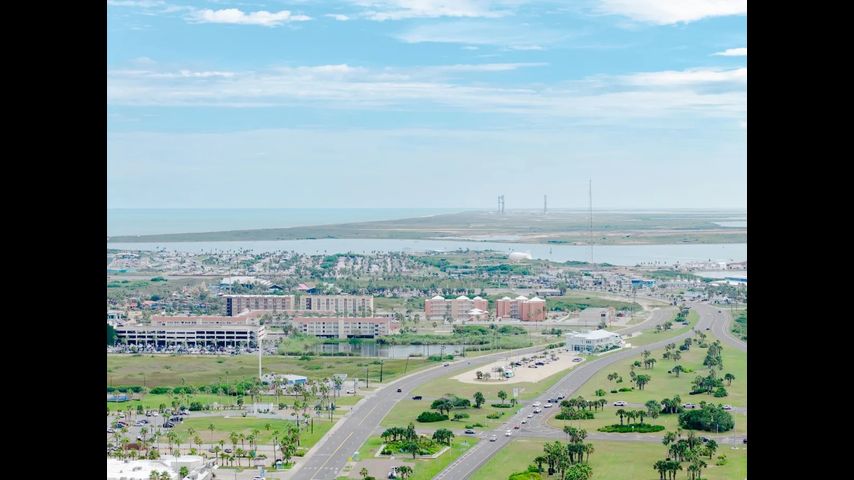
For now, SpaceX plans to use the acquired land for an eastward expansion of the Massey Test Site, a rocket testing facility near Starbase, and to construct a service road connecting the facility to State Highway 4 at a point closer to Starbase.
However, an attorney for SpaceX, Tyler Welti, told the judge it would be fair to conclude that SpaceX would develop the land further in the future in a way that would impact wildlife and vegetation.
“It’s several steps removed to say that plaintiffs will be harmed by that, by not being able to enjoy, for example, the possibility of seeing jaguarundi or ocelot that don’t exist there,” Welti said during a hearing earlier this month.
The judge ultimately sided with SpaceX and U.S. Fish and Wildlife, concluding that the conservation groups’ concern over being able to view certain species in the area, including the endangered ocelot, was contradicted by an environmental assessment conducted by U.S. Fish and Wildlife.
The assessment concluded that it is unlikely that ocelots occur in the area proposed to be given to SpaceX. An evaluation of the land swap deal reached a similar conclusion regarding other species.
“And more broadly, the Final Environmental Assessment identified no significant adverse affect from the Land Exchange in the area near the Massey Test Site, “ the judge wrote in the order.
Reporting in the Rio Grande Valley is supported in part by the Methodist Healthcare Ministries of South Texas, Inc.
This article first appeared on The Texas Tribune.
More News