What to know about the push to make Bible stories required reading in Texas public schools
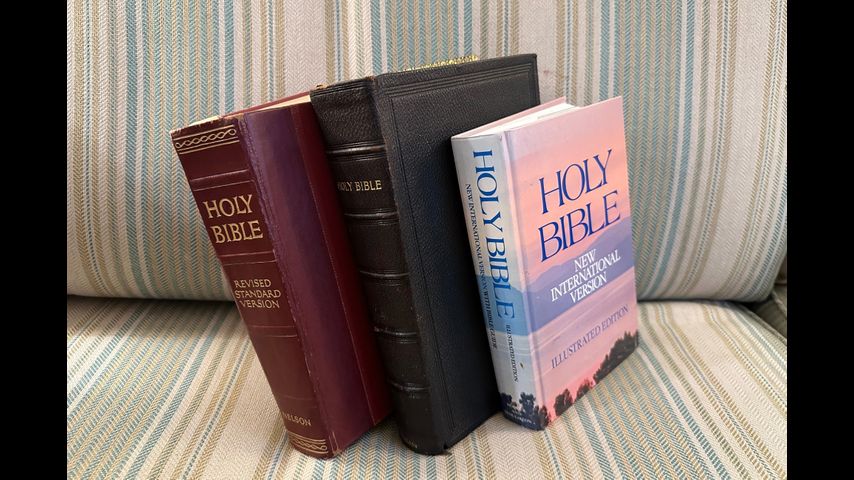
AUSTIN, Texas (AP) — Texas would make Bible stories required reading for more than 5 million public school students under a proposal that has reignited debate over widening efforts in the U.S. to put more religion in classrooms.
A final vote by the Republican-controlled Texas State Board of Education on whether to approve the plan is set for Friday. Last year Texas became the largest state to require every classroom to display the Ten Commandments.
The proposed list has drawn fierce opposition. Critics argue that it violates the constitutional separation of church, lacks diversity and favors Christianity over other religions. Supporters say Judeo-Christian traditions were fundamental to the nation's founding and that should be reflected in the public school curriculum.
Here's what to know about the proposal and the broader fight over religion in public schools:
Republicans and Trump have pushed more religion into classrooms
President Donald Trump has pledged to protect and expand religious expression in public schools nationwide, and Texas — a red state that is home to about one in 10 of all U.S. public school students — often sets the agenda.
In 2023, Texas became the first state to allow the hiring of chaplains to counsel students, and the following year, the board narrowly approved an optional Bible-infused curriculum for elementary schools. Last year, Republican lawmakers required public schools to display the Ten Commandments, a measure recently upheld by a federal appeals court.
Texas has about 5.5 million public school students from kindergarten through high school. If approved by the board, the required reading list would take effect in 2030.
"We need to focus on what our nation was founded on and not apologize for that," Susan Perez, founder of Citizens for Education Reform, told the education board during testimony this week. "It is the truth and we should not be afraid."
List requires Bible readings from elementary to high school
Picture-book stories for elementary students including "David and Goliath" and "Daniel and the Lion's Den" were on the required reading list. By fourth grade, students would encounter passages about Jesus in the New Testament.
One proposed Bible story, a picture book about Noah's Ark, was removed from a list of first-grade titles this week after a board member said it only had one page of text and voiced objections to descriptions of animals killed in the flood.
By middle school, students would be expected to read several passages about Jesus, including passages from his most famous sermon, and another where he instructs people to cast aside earthly anxiety and seek the kingdom of God. Another would connect a reading from the Book of Lamentations and its themes of the destruction of Jerusalem with readings about the Holocaust.
In high school, students would read the parable of the prodigal son, portions of the Book of Job, and the story of Adam and Eve.
Some education observers said Texas may be the first state to enact a required reading list, with the added layer of mandated religious text.
Antero Garcia, president of the National Council of Teachers of English and a Stanford University professor, said he doesn't know of any other state that has such a list. Educators at the district and school level usually choose what texts their students will read, Garcia said.
Kasey Meehan, director of PEN America's Freedom to Read program, said she believes such a mandated reading list would be "unique" to Texas.
"I think there's lots of state lists that exist that are like advised readings, suggested readings," she said.
Critics say the proposal favors Christianity over other religions
The required readings rely heavily on the King James Bible, one of the most popular translations, and more recent evangelical translations that critics argue lean too heavily on Christian interpretations of the texts.
Other critics question whether religious stories should be taught at all in schools attended by thousands of children of Muslim, Buddhist, Hindu and other faiths, and others who identify as atheist or agnostic.
"I do think that it's disturbing that there are no texts from other religious traditions that are included," said Frank Strong, an English and journalism teacher and co-founder of the student advocacy group Texas Freedom to Read.
___
Stengle reported from Dallas.
More News