While data centers boom in Texas, their plans stay shrouded in secrecy

This story was supported by the Pulitzer Center.
BELLS — Last year, Mason McCallister saw survey markers on a property near his home in a rural community about an hour north of Dallas. He suspected it might be for a new data center he’d heard about from a neighbor.
But information hasn’t come easy. He found no project announcements and saw nothing on county agendas. Several local officials told him they knew nothing of the project.
The 34-year-old realtor searched property records. He knocked on neighbors’ doors to ask what they knew. His wife, also a realtor, asked the surveyors who was buying the land, and his grandma chased a neighbor down at church to ask if he sold his property.
Eventually, McCallister mapped companies contracting with landowners all around him including Black Mountain, an energy and digital infrastructure group based in Fort Worth. He dug up a permit for a power plant from a company with the same address as Black Mountain, indicating the data center could build its own power source.


Then in March, after months of searching for answers, McCallister drove 100 miles to a town hall in the Fort Worth area where he learned Black Mountain’s CEO, Rhett Bennett, would be speaking about a different project.
After the presentation, McCallister confronted the CEO and got his confirmation: Yes, Black Mountain was exploring a data center near his home.
“Deep down I was always hoping that I was wrong,” said McCallister, after getting his answer.
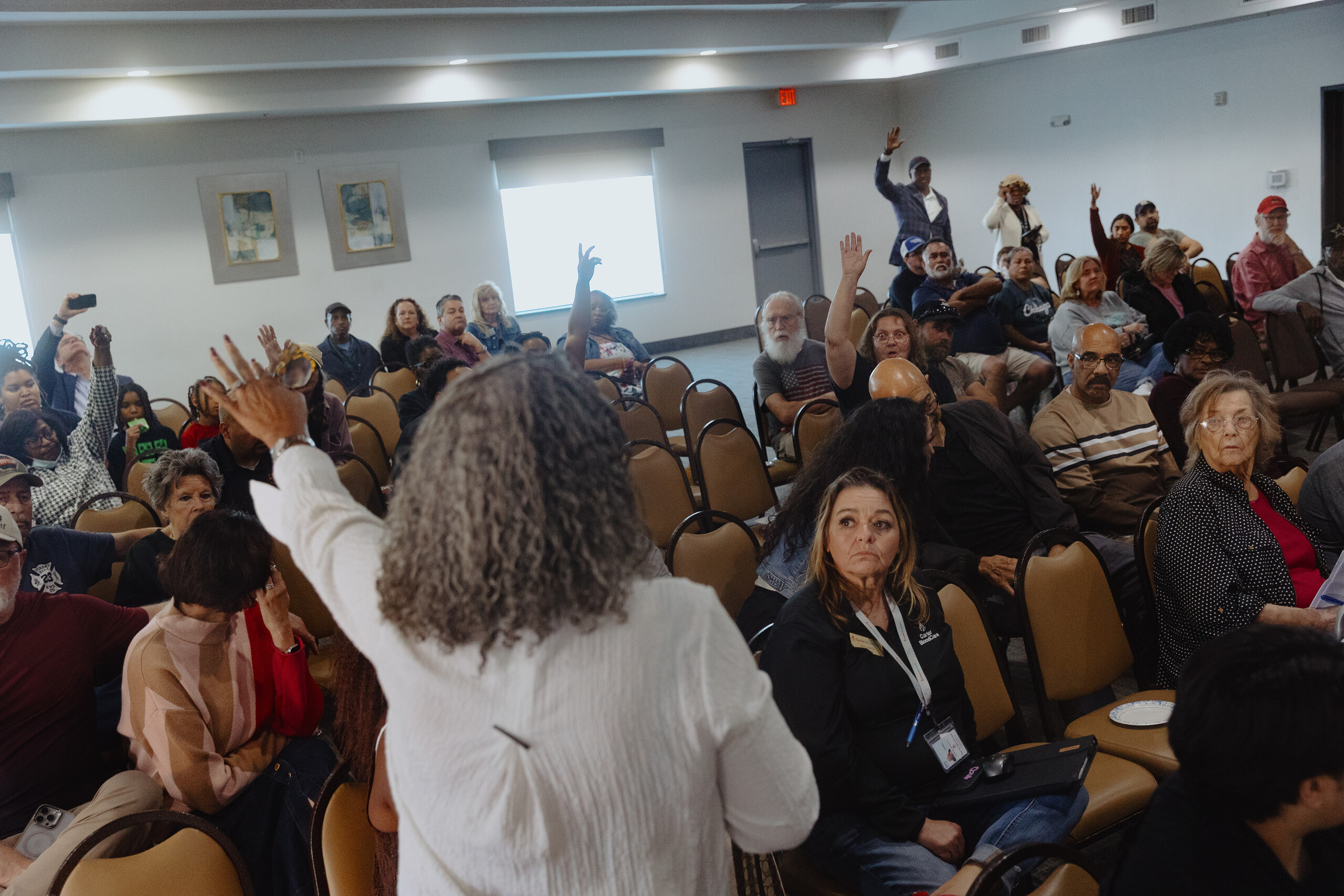
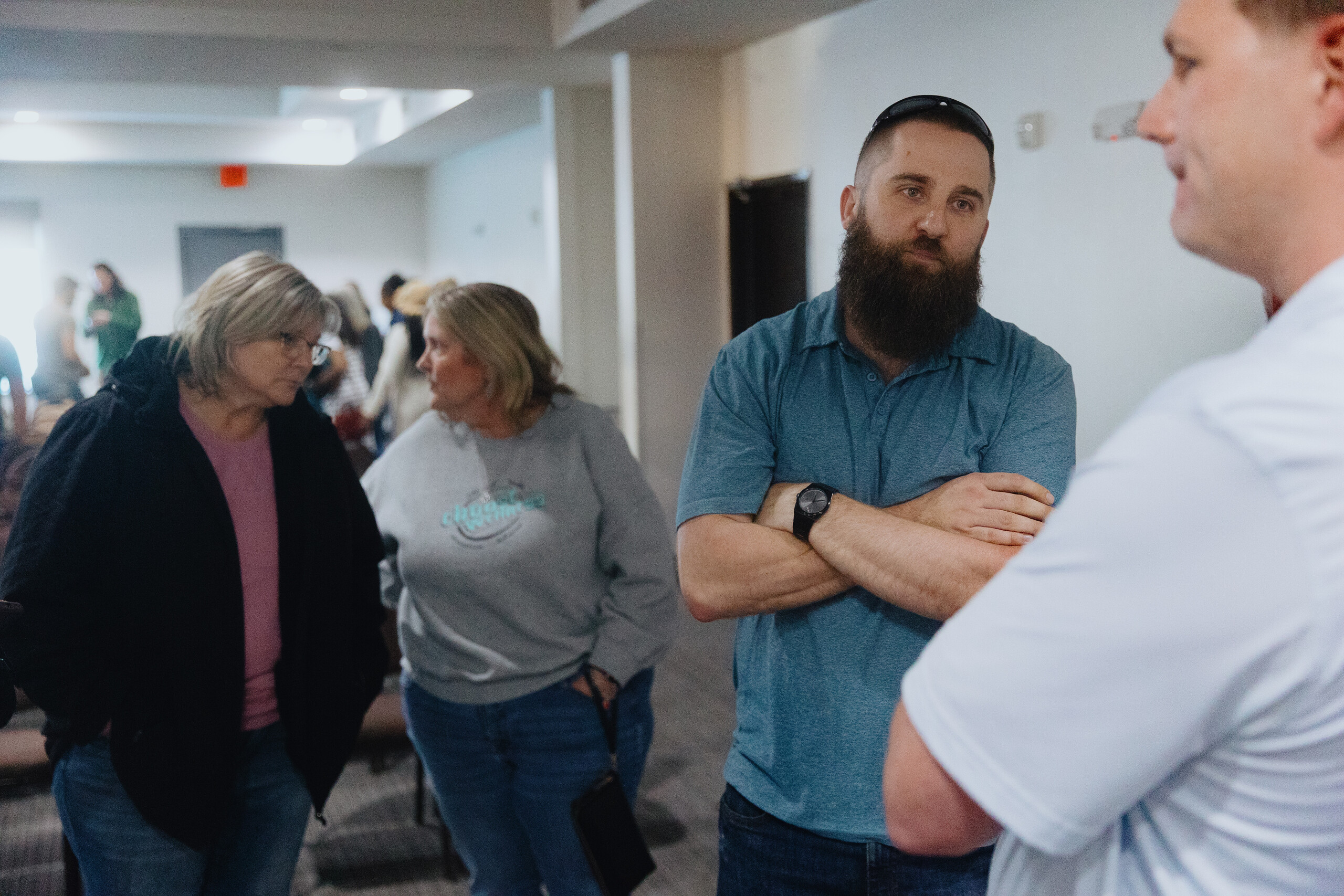
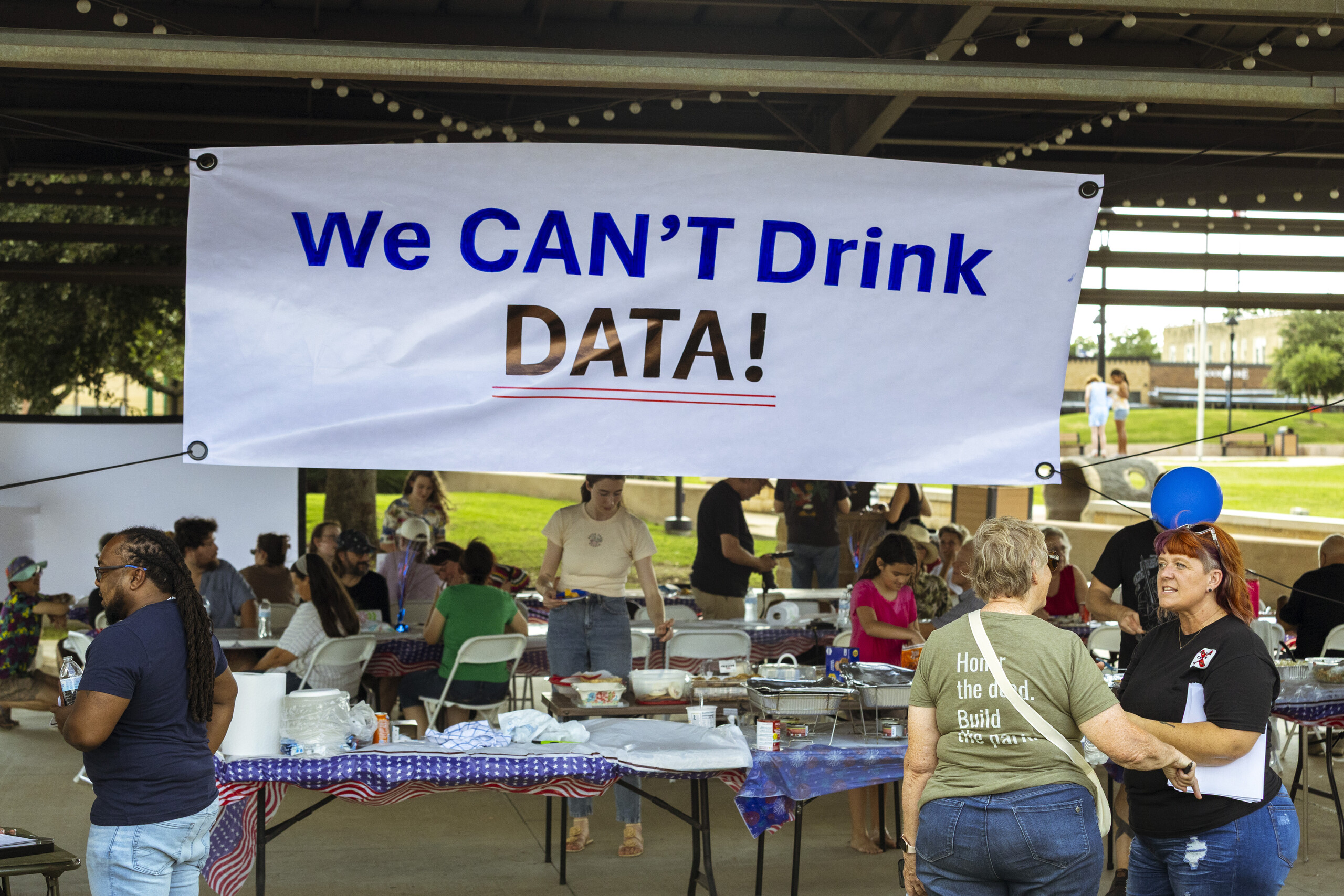
As data center proposals are popping up across Texas, local residents have grown increasingly frustrated by how difficult it can be to get information about the projects that they say threaten to disrupt their communities. Armies of concerned neighbors, such as McCallister, have become their own private detectives in search of signs or confirmation about data center plans in lieu of public disclosures, pestering local officials at meetings or in the grocery store and sharing their findings across Facebook groups with thousands of members.
“Knowledge is power, right?” said McCallister, whose family has owned the property in Bells for roughly 150 years. “Everyone’s being so quiet about it, and everyone’s being so secret about it. If it was so good for the community, they would be screaming it from the rooftops.”
Black Mountain officials declined comment.
Homeowners aren’t the only ones operating in the dark. Local officials say they’ve been blindsided by data center projects or asked to consider approval without adequate information. For example, The Texas Tribune reported that Hood County was sued by a data center developer after they rejected a concept plan, citing lack of information about where the facility would draw its water from.
In other cases, nondisclosure agreements prevent local officials who are negotiating deals with companies from sharing what they know. In other cases, tech giants use shell companies to shield their identity in public filings.
Oftentimes, locals and even county officials say they don’t learn of the project until it’s too late to try to stop it. Indeed, officials with Crusoe, a developer building a massive data center in Abilene, shared in a presentation to state electric grid officials this year that local outreach typically begins after securing land, contractor selection and financing begin.
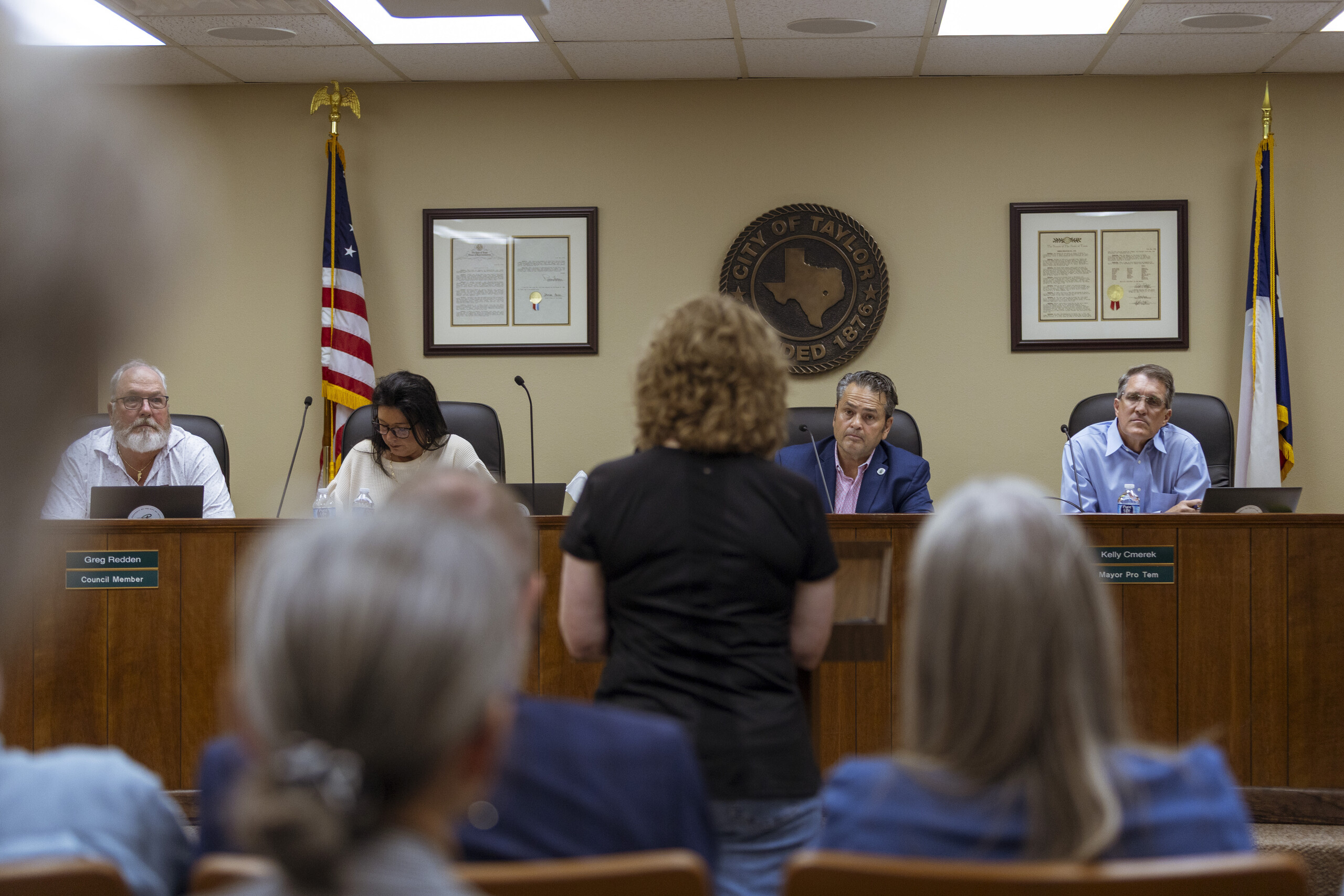
At least 34 Texas counties have formally called on the state to make more information available, including Grayson County where McCallister lives, according to a tracker kept by Public Citizen, an advocacy organization which has worked with grassroots data center opposition groups.
“Nothing in no way, shape, form or fashion has ever been presented to the government of Grayson County,” said county Commissioner Art Arthur. “I don’t know that there has to be. That's the scary part.”
Meanwhile, state leaders are calling for tougher laws in the coming legislative session to make data centers report more information.
Last week, Gov. Greg Abbott called to halt approvals for data centers seeking to connect to the state’s grid until state regulators and the grid operator can audit them.
In an Aug. 3 letter that reinforced how even the state is struggling to get information from data centers, Abbott said proposals should be denied unless they provide details on tax breaks the data center companies will receive, power use and generation, water use and cooling operations, efforts to reduce impacts on local communities and ownership of the facility.
This comes as Texas is rivaling Virginia as the new national leader in data centers fueling an artificial intelligence boom. The Texas Tribune reported there are at least 248 data center projects planned in the state. Those projects were identified in part by combining databases compiled by companies that track the industry, as the state does not publicly track data center development.
Data center companies say they are sharing information and trying to make it easier for the public to see their environmental impact. Google publishes site-specific water consumption for its data centers annually. Microsoft has a Texas fact sheet touting its creation of more than 500 jobs, commitment to renewable energy and efforts to lower light pollution. Crusoe in a statement said it was investing in “earlier and more consistent community engagement,” such as through blog posts, local liaisons and open houses.
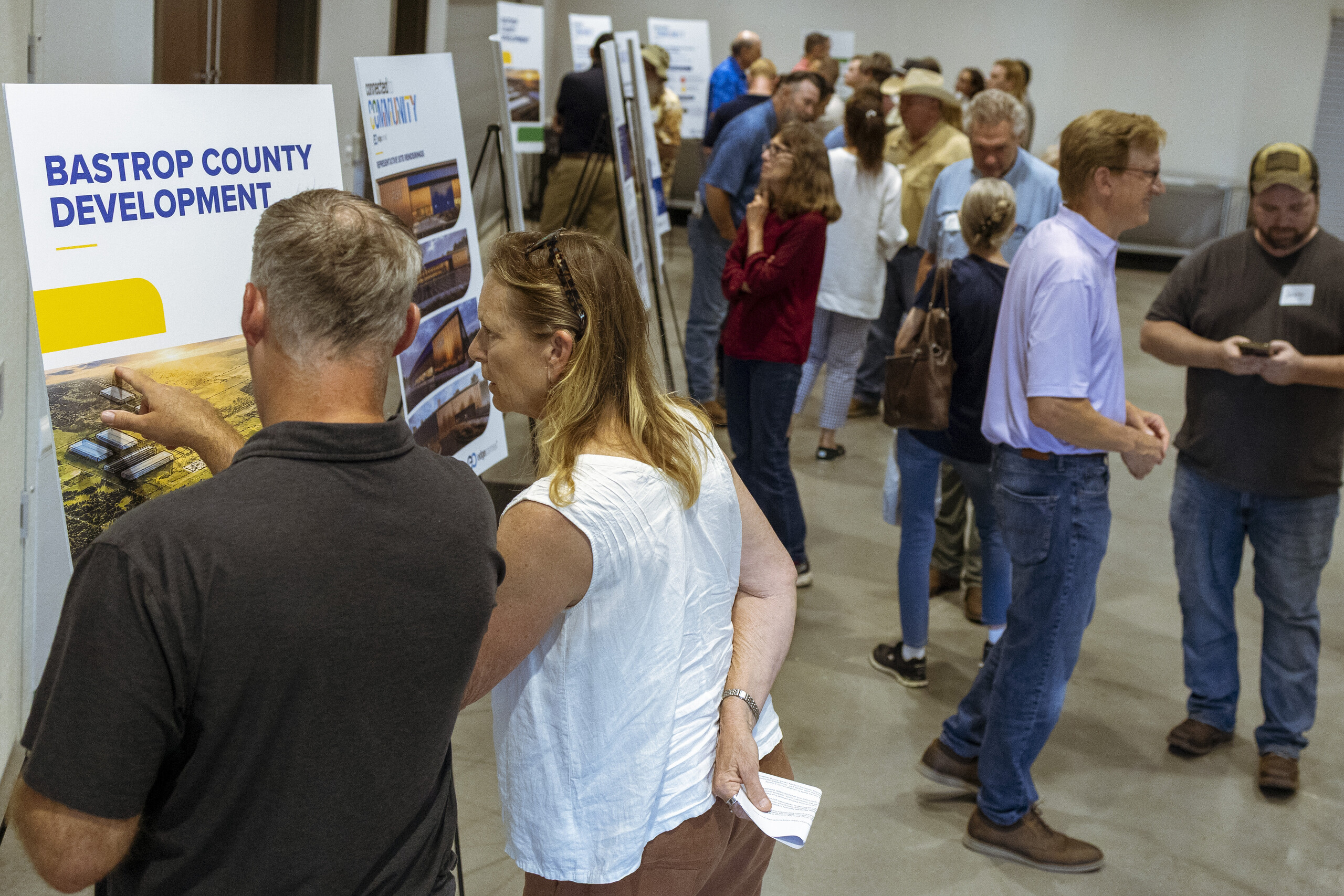

Dan Diorio, vice president of state policy at the Data Center Coalition, the largest industry trade group, said their main concern when it comes to transparency measures is market rivalry.
“This is a very competitive industry, and the technology moves very fast,” Diorio said. “Your technology, related to cooling, related to electricity use and efficiency, is going to be your competitive edge in the marketplace.”
Tracy Hester, an environmental law professor at the University of Houston, said data centers don’t appear to be more secretive than any other major private industry. But transparency has become a heightened issue because of the nature of how new the industry feels and how widely the resource-intensive facilities are proliferating all at once.
He compared it to the fracking boom in the 2010s, when the industry faced heavy blowback from environmental activists and local residents over water usage and pollution concerns. The industry ultimately made concessions such as agreeing to disclose what chemicals they use but not the exact concentrations.
“The velocity and the scale is what's the issue; it's not the nature of the operation,” Hester said. “That does make the seams show, but that's not just because it's a data center, because they have a special ticket, it's just they're moving really fast, and the system's straining to keep up."
NDAs and Shell Companies
Julie Waters, a Dallas attorney, felt alarmed to learn of a data center planned in her hometown of Crowell, a 600-person town in North Texas where her parents still live. The local utility is already at Stage Four water restrictions for her area, meaning each resident must decrease their daily use by 40% and refrain from using sprinklers, washing cars and filling pools.
“We need to know how they are going to affect our water, how they're going to affect our electricity, how they're going to affect our health, and what's going to happen to our agricultural land,” said Waters, who created a Facebook group called “Texans United Against Data Centers” that boasts more than 35,000 members. “You know, what's going to happen to the cattle, what's going to happen to the crops. So that's why transparency is so key.”
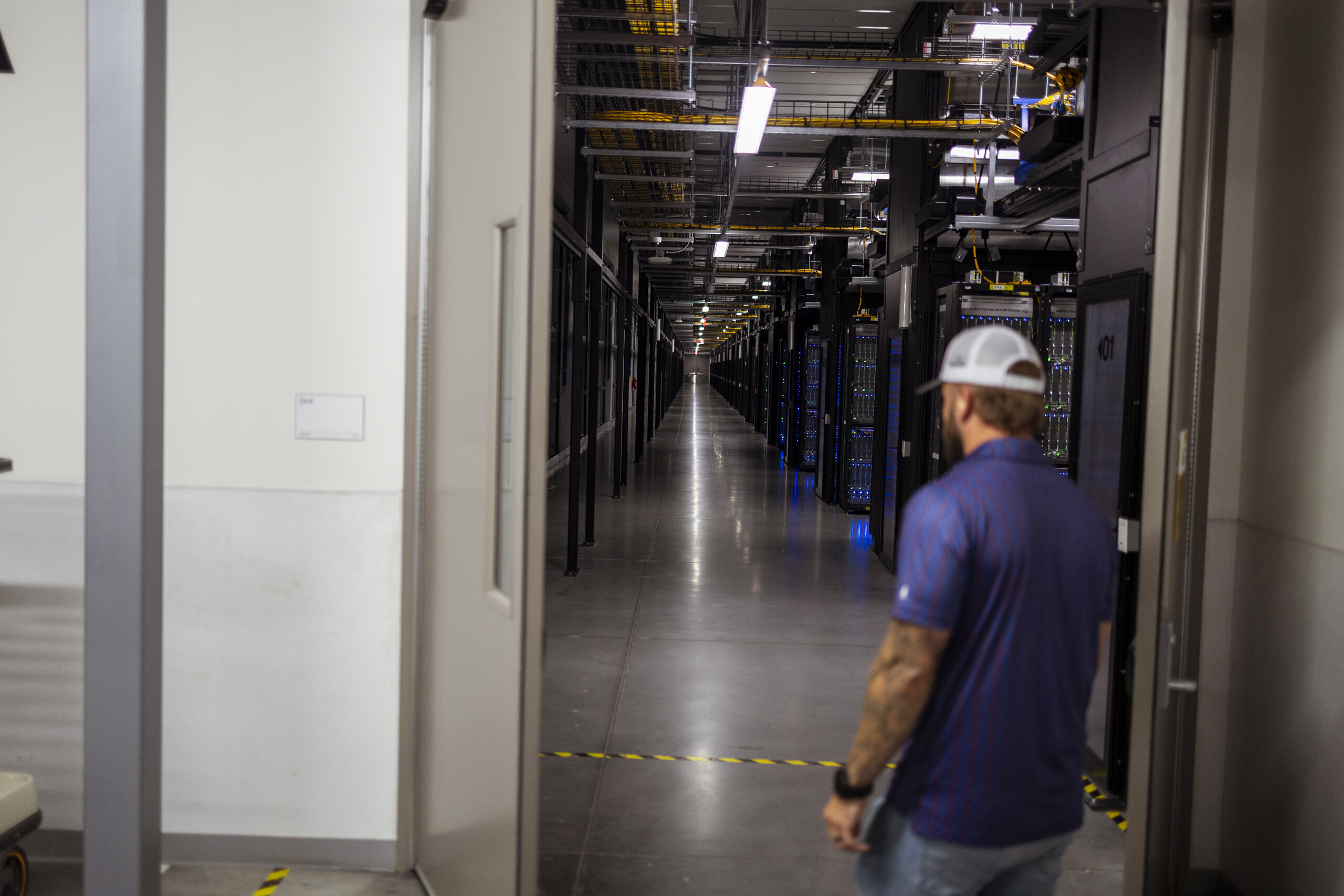
Data centers can consume millions of gallons of water per year, necessary to cool their equipment. But publicly available information about their water consumption is often difficult to find.
There is no uniform reporting system for data center water usage in Texas, so a resident in search of information about a data center’s water use would have to know which entity has oversight. That could be a local utility, river authority, groundwater district or city.
Even then, entities might not disclose what they have. Municipal water providers have declined requests in some instances, citing a section of the Texas Utilities Code that allows it to shield an individual customer’s account.
In Crowell, Waters learned that the water agency called the Red River Authority in February signed a nondisclosure agreement with one potential developer, a copy of which was reviewed by the Tribune. The agency’s general manager, Fabian Heaney, said it’s rare that he’s asked to sign those, but the company had argued it was necessary because their proposal contained “proprietary technical information,” so he agreed.
Heaney said the authority denied the developer’s application in May because it did not have enough water available, but if the proposal had moved forward, it would have gone before the board in a public meeting.
“They're trying to see if we have water available, and we're just trying to see if we can provide it,” Heaney said. “But we’re not trying to hide anything.”
Diorio, the data center coalition official, said NDAs are “very common practice in economic development,” especially during initial phases like site selection.
“You have that NDA on the front end to say, ‘Hey, let's protect this information now, because we're not even sure if we're going to develop here,’” he said, adding that local officials have reported to them that NDAs allow them to have more information in their decision-making process without compromising a company’s proprietary information.
In Hood County, county commissioners in 2025 approved a letter of support for waiving property taxes for a company whose identity and project details had not been publicly disclosed. An economic development official for the city of Granbury told commissioners that she was under a nondisclosure agreement and could not answer their questions about the company, according to county meeting minutes. The letter was unanimously rescinded in January after public outcry.
Similarly, the local incentive agreement for the enormous Meta data center in Fort Worth was approved before the tech giant’s identity was publicly known, as city and economic leaders said they were barred by a nondisclosure agreement from discussing any details.
“There's now an incentive to conceal the fact that a project is a data center as long as that is practically possible because the sooner it's known as a data center project, the likelier organized local opposition becomes,” said Adrian Shelley, director of the Texas office for Public Citizen.
Brandon Shelby, an economic development lawyer who frequently consults for cities, said officials need to be able to negotiate in private with companies to get the best deal for taxpayers.
“Every single economic development project in the state of Texas has some level of confidentiality,” Shelby said, adding that NDAs are common practice. “Nothing would get done without it.”
This spring, Microsoft, one of the largest data center operators in the U.S., facing a backlash, announced it would cease the use of the agreements “to allow for greater transparency moving forward.”
Shelby added that while Texas law allows local governments to negotiate economic development and real property deals in private, they must put them on public meeting agendas and vote on them in public.
But sometimes those companies shield their identities on those public votes, and on state records, by registering under shell companies.
For example, Meta negotiated multimillion-dollar tax abatements for their massive data centers in both Fort Worth and El Paso under shell companies called Winner, LLC and Wurldwide, LLC. Both are registered in Delaware where companies are not required to disclose their owners.
Meta declined to comment on the reason for its use of such companies.
County leaders have said they feel pressure to sign tax agreements because they feel it’s the only way they can get leverage to force companies to divulge specifics.
“I don’t believe that counties or our taxpayers – I don’t believe that they should have to use … tax abatement agreements to get that information,” said Delta County Judge Tanner Crutcher, whose commissioners court passed a resolution in March opposing abatements for data centers. “That is information that we need to look at in the Legislature to understand how we can address that without having to offer financial incentives.”


State information gaps
State agencies are also facing gaps in what they know about data centers.
The Texas Water Development Board, the state agency that oversees the state's water planning, since 2020 has asked for monthly water use information from data centers that use at least 10 million gallons annually. Although reporting is required by law, compliance has been low – less than one-fifth of 341 data centers responded in 2025, according to records.
The Public Utility Commission, the agency that oversees the state’s power grid operator, as well as its water utilities, this year conducted a separate, voluntary water use survey. The commission contacted 377 facilities but only heard from a fraction of them. The commission reopened the survey for 10 days in July. It is seeking to withhold the results from the Tribune and has requested an attorney general opinion on the matter.
Abbott said that the limited response from the industry prompted him to initiate the pause on data center approvals, writing in his letter that the lack of information “hinders your ability to make fully informed decisions.”
After previously celebrating Texas becoming a destination for AI infrastructure, Abbott in June started cracking down on the industry, calling for increased regulation, a repeal of a state sales tax break for data centers and new requirements that data centers report electricity and water usage data annually to regulators.
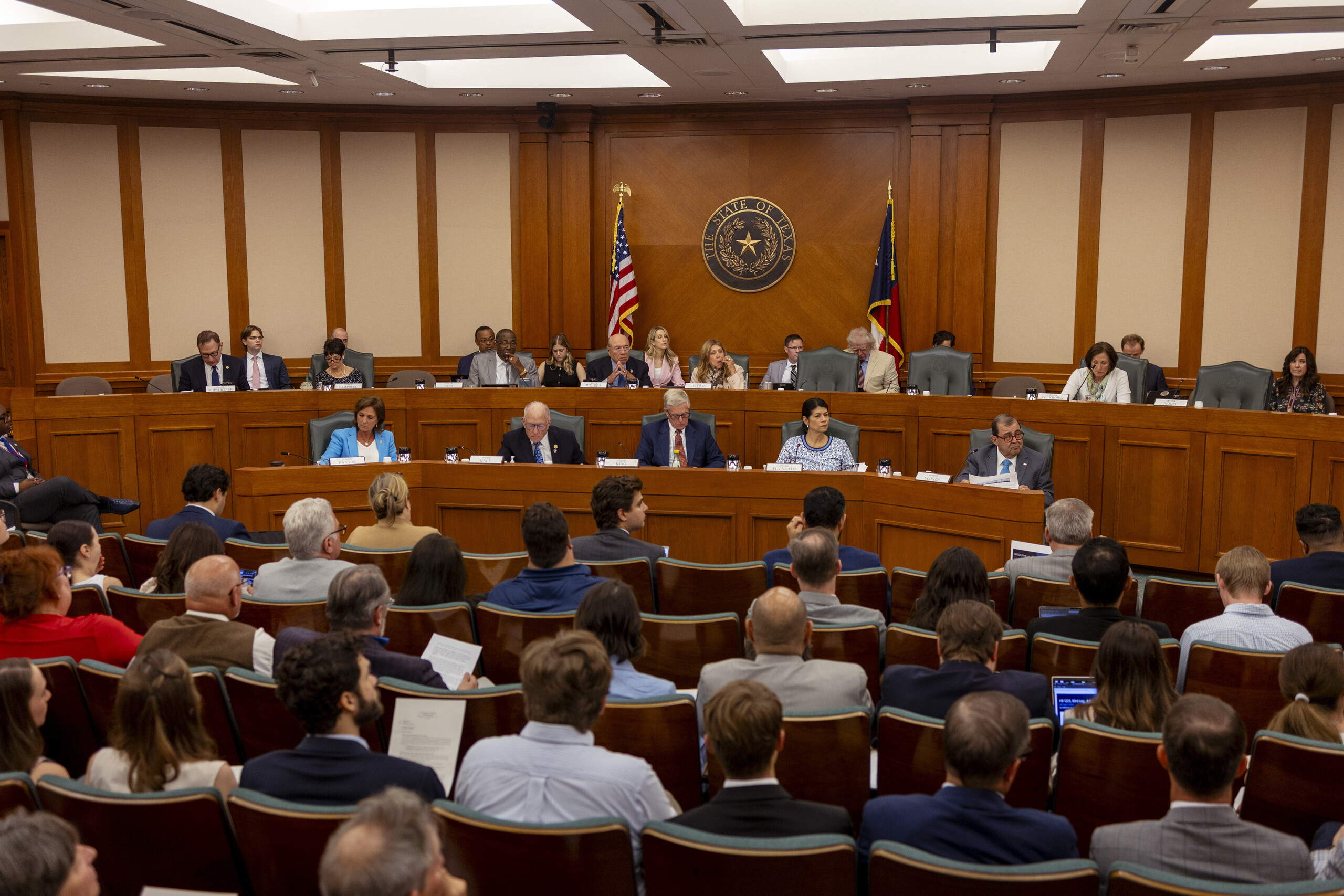
Texas lawmakers on both sides of the aisle have expressed frustration at the lack of data available to them.
“If you want to do business in Texas, you say you want to be a good actor, that’s great, we invite that,” state Rep. Mary González, a Democrat from Clint, said at a panel discussion hosted by the Tribune. “But you need to be able to at least tell us how much water and how much electricity you’re going to use. Because we need to be able to plan as a state. And without that information, you just leave us with a huge gap.”
But not all information collected by the state and operators of the power grid is available to the public.
The Electric Reliability Council of Texas, the state grid operator, has a lot of information that residents want, including how much power a project could use, where it’s being built and who is building it. But ERCOT considers project-level data private. Instead, ERCOT only shares aggregate power consumption data with the public.
The state also doesn’t share data about the value of state sales tax exemptions offered to individual data centers, citing state law that allows proprietary information to be withheld. In total, the tax break will cost Texas more than $3.2 billion over the next two years.
The governor did not respond to multiple requests for comment from the Tribune about whether the reporting he called for from data centers would be available to the public or just state government.
The search goes on

Back in North Texas, McCallister is still checking records every other day to monitor new developments on the properties around his home. He receives notifications of every environmental permit approved in his and the neighboring county. He pesters politicians.
McCallister feels desperate to find the one piece of information that will reveal some way to slow the project. He wakes every day thinking, “Today’s the day I’m going to find it.”
Concern for his family’s legacy and the community’s future motivates him.
Here, on Legacy Farms, McCallister’s wife keeps her beloved horses, his young daughters ride a miniature off-road vehicle and the whole family visits mamaw next door. They fear the noise, lights and health impacts from air pollution that living by a data center could bring.


McCallister’s advocacy galvanized others. Last month, roughly 100 people went to a local Republican rally. Many wore bright red shirts emblazoned with “SAVE RURAL TEXAS” and “PAUSE AI DATA CENTERS.” Abbott recognized them from the stage, McCallister said.
“Them doing it in secret for so long, they control the narrative,” McCallister said of data center operators. “They can get all their ducks in a row before anarchy happens.”
“I’m taking that away from them.”
Alejandra Martinez and Paul Cobler contributed to this reporting.
Disclosure: Facebook, Google, Meta, Microsoft and University of Houston have been financial supporters of The Texas Tribune, a nonprofit, nonpartisan news organization that is funded in part by donations from members, foundations and corporate sponsors. Financial supporters play no role in The Texas Tribune's journalism. Find a complete list of them here.
This article first appeared on The Texas Tribune.
More News