Screwworm concerns force Rio Grande Valley shelters to change transportation plans
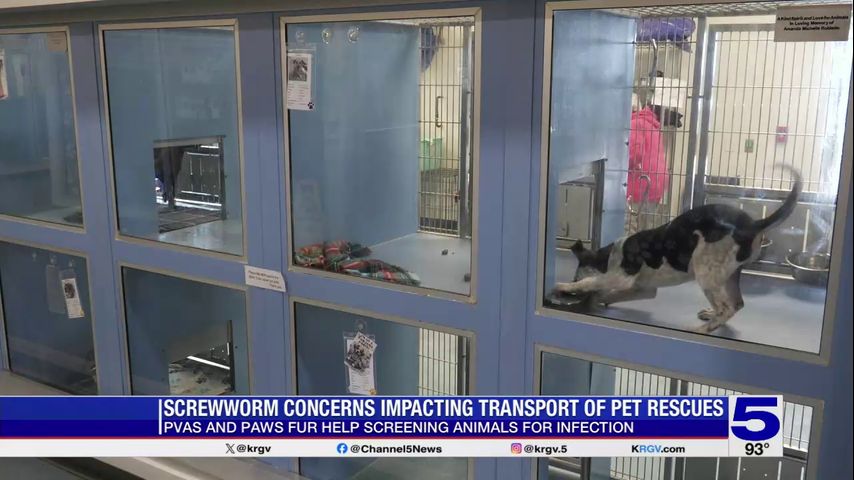
Concerns over the New World Screwworm are making it harder for some Texas animal shelters to send pets to other states.
Some states are already turning away animals from Texas, forcing local shelters to rethink how they move animals out of state.
Palm Valley Animal Society, known as PVAS, sends around 100 animals on out-of-state flights to prevent overcrowding. The organization recently had to cancel a transport after a sudden policy change.
"I believe we had to cancel a transport recently because of the situation, because it was a sudden policy change, because they said they can't accept animals from Texas anymore," PVAS Development Manager Jarod Muñoz said. "Again, it puts a wrench in our current plans."
Muñoz said some states are still accepting animals from Texas but with conditions.
"Unfortunately, some states are already declining animals from Texas right now. Those shelters are unavailable for us to ship to," Muñoz said. "The ones that are still accepting from Texas are requiring medical care checkup."
PVAS is not the only shelter dealing with the restrictions. Paws Fur Help is also facing transport challenges with Wisconsin, Florida, Pennsylvania, and New York.
Paws Fur Help Executive Director Dendea Balli said the organization is finding other ways to get animals where they need to go.
"However, we can deliver to other states in that area and people can go pick up their animals from another state line," Balli said.
Both shelters are now training staff and screening every animal for signs of screwworm.
"It certainly changes our protocol and makes us more effective and more aware of the circumstances and we check the animal from nose to tail, making sure there are no wounds," Balli said.
Palm Valley Animal Society is also screening every animal that comes in to check for open wounds. Both shelters say the extra screening adds to their daily workload.
The shelters are also working on getting new medications to treat screwworms.
"We are eventually going to get some materials specifically for those in-shelter pets. Just in case anything like that does happen. We will be prepared," Muñoz said.
If a shelter detects a screwworm infection, the shelter is required to send the animal to the Texas Animal Health Commission.
Watch the video above for the full story.
More News