Facing the Fury 2026: Meet the crews who fly directly into hurricanes to keep you safe
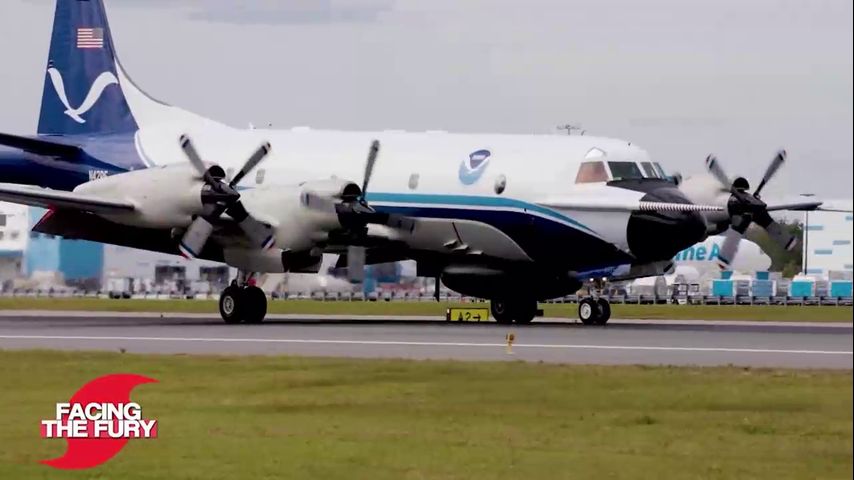
Hurricane hunters fly directly into the eye of a storm to collect data that helps forecasters better predict where hurricanes are headed and how strong they'll get.
Channel 5 News Chief Meteorologist Tim Smith traveled to Louisiana to see the work firsthand.
John Zawislak is in his 11th season flying into hurricanes for NOAA, the National Oceanic and Atmospheric Administration. This year, he expects to fly into his 250th eye of a storm.
"We're going right through it. This airplane flies at 8 to 10 thousand feet. We go right through the eyewall. Find the center, go right through the other eyewall," Flight Director and Meteorologist Jon Zawislak said.
Maj. Alex Boykin flies for the Air Force Reserve's 53 Weather Reconnaissance Squadron.
Air Force Flight Meteorologist Sarah Olsen rides in the back of the plane, gathering information.
"We've got a bunch of different sensors on the plane. The main thing we use is dropsondes. I like to tell people it's like a weather balloon in reverse,” Olsen said. “We drop about 20 of those in the storm at a time. It gathers information on wind speeds, temperature, pressure — all of that information. It comes through me, where I QC it, and we send it off the plane.”
That quality-controlled data goes to the National Hurricane Center, where it gets added to computer models to improve forecasts.
"It improves track forecast up to 20% — so a pretty good shrink in that cone that goes out to the public. Obviously it helps determine who needs to evacuate and lets people stay that don't need to evacuate," Olsen said.
The WC-130 is the Air Force plane that flies into hurricanes. Crews sit in the cockpit for 10 to 12 hours, flying into and through the storm, running figures through it and back out. The crew in the back collects weather data and sends it to the National Hurricane Center to help determine whether a storm is strengthening or weakening.
The NOAA P-3 also carries a tail Doppler radar.
"So every time we pass through the hurricane, we actually see how the eyewall is changing. Maybe it'll tell us it's degrading. Other times it'll tell us the storm may be strengthening," Zawislak said.
Flying into hurricanes isn't always smooth. Last year's Hurricane Melissa flight near Jamaica was one of the worst the crew had experienced.
The plane flew through a mesovortex — essentially a tornado within the eyewall.
"We lost significant altitude; we thought we had over-g'd the aircraft. Both positive and negative G's in a very short time span, losing about 1500 feet in what I would classify as extreme turbulence. Everything in the cargo compartment went flying," Olsen said.
Everyone on board was OK, but the storm left a mark.
"One of the water bottles that was in one of the flight bags actually came up and hit me in the face and gave me a black eye. So it's kind of a joke that I got a black eye from a hurricane," Olsen said.
The crew had to circle inside the eye for more than 30 minutes before finding a way out.
“If I'm being really honest, I thought about my 2-year-old daughter. I was worried I was never going to see her again. It was the first time I'd ever been in a storm environment where I thought I might not make it out of this. I was praying a lot," Olsen said.
For these crew members, the danger doesn't outweigh the drive to do the work.
"Oh, I love my line of work. There certainly have been flights I come down and say — it's the silence of the radio on the way home. Last year it was Melissa. You come down and say 'what just happened?'" Zawislak said.
Boykin said the personal stakes make the mission feel meaningful.
"I went through Hurricane Sally in this thing as it was making landfall — as it was hitting my own house. That was a unique feeling. So I know the impact. So to be able to do something that directly helps our friends and families is really fulfilling," Boykin said.
As the 2026 hurricane season approaches, forecasters are calling for a slightly below-normal season with 13 named storms, six hurricanes and two major hurricanes.
The development of a strong El Niño in the Pacific is the biggest factor in that forecast. Warmer-than-normal water in the Pacific changes wind patterns enough to create strong shear in the Atlantic, which makes it harder for storms to grow.
Watch the video above for the full story.
More News