Facing the Fury 2026: Hurricane Harvey survivor recalls rapid intensification in 2017
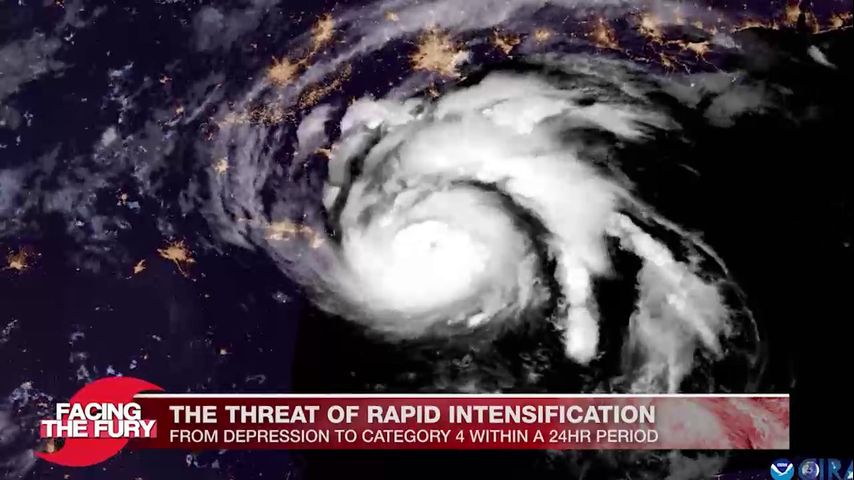
Many of the strongest hurricanes to hit the United States were not even hurricanes less than 48 hours before landfall.
Rapid intensification is when a storm strengthens quickly over a short period of time. It's something meteorologists often see in the Gulf and it can leave people unprepared.
Hurricane Harvey is one example. In 2017, Harvey went from a depression to a Category 4 in just over two days.
Gail Schuller, a Hurricane Harvey survivor, remembers watching the storm grow stronger by the hour.
"It kept strengthening and strengthening and strengthening," Schuller said.
She wasn't worried at first. Harvey looked manageable when it first approached the Texas coast in late August 2017, Schuller said.
That changed fast.
Schuller and her friends rode out the storm at a friend's home. She said the first half of the hurricane was manageable, but conditions got much worse once the eye passed.
"The second round came, the walls started breathing, and then the garage door was [shaking violently] and we had to put screwdrivers in that to keep it from blowing away,” Schuller said. “All communication went down, nobody knew if we were alive or anything. It's an experience I don't prefer to relive."
Schuller said she has lived through several storms, including Celia and Andrew, but had never seen anything change that quickly before.
Storms in the Gulf don't always give people many days to prepare. That window can close fast, which is why experts say it's important to be ready before a storm ever threatens the Rio Grande Valley.
Watch the video above for the full story.
More News