Proposed reading list for Texas students draws concern over religious themes, lack of diversity
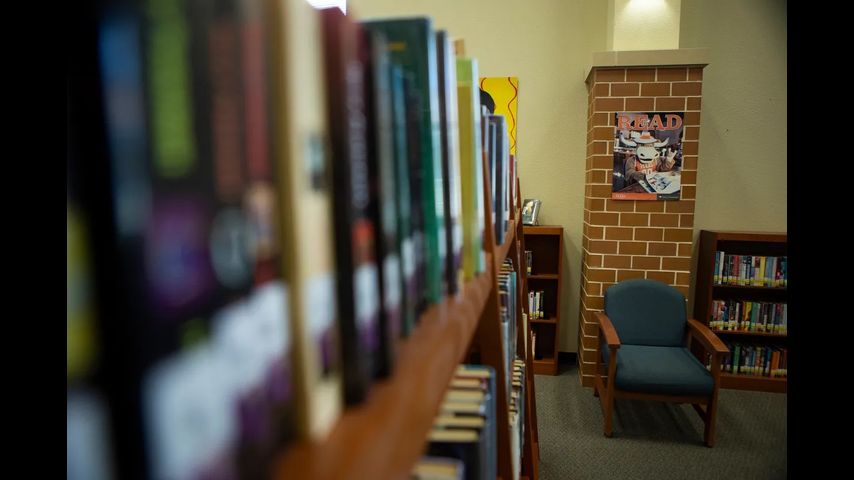
The Texas State Board of Education delayed voting on a proposed list of required books for K-12 students Wednesday night after hours discussing the reading materials’ religious focus and hearing public concerns about a lack of racial, ethnic and gender diversity.
Voting 13-1, the board delayed consideration until its April meetings to allow members time to consider the list and solicit feedback. Brandon Hall, a North Texas Republican board member, opposed the decision.
A 2023 state law required the Texas Education Agency to create a list of reading materials for the board to consider, with schools required to teach the materials beginning in the 2030-31 school year. The agency recommended nearly 300 books for consideration, though the law only required at least one literary work in each grade.
The list includes childhood favorites and classical literature across a range of genres — from Dr. Seuss’ The Cat in the Hat to S.E. Hinton’s The Outsiders — while also incorporating religious materials with a Christian focus, like The Parable of the Prodigal Son and The Road to Damascus.
The presence of religious literature was the source of frustration Wednesday among several Democratic board members and Texans who testified. They argued that an emphasis on Christianity and not other religiously diverse readings conflicts with the U.S. Constitution’s Establishment Clause, which prevents states from endorsing or promoting a particular religion.
Democrats and public speakers also raised concerns about the length of the list, saying the state requiring hundreds of books prevents educators from adapting learning materials to their students.
The list sprinkles in the work of authors such as Frederick Douglass and Langston Hughes. Still, many of the speakers at Wednesday’s meeting said the list lacked racial, ethnic or gender diversity — pointing out that Hispanic and Black children make up the majority of Texas students.
“This list does not represent the students of Texas,” said Tiffany Clark, a Democratic board member who is Black and represents parts of North Texas. “For so many years, students of color have had to endure a European-centered philosophy, history without representation of their own history.”
Board member Marisa B. Pérez-Díaz, who is Hispanic, struggled to cough up words after three educators testified about how books, as one of them articulated, “serve as both windows and mirrors.”
“I think about little Marisa in school and not ever being exposed to literature where I saw myself,” said Pérez-Díaz, a San Antonio Democrat. “I did not expect to get emotional right now, but I find this discussion is going to get me there.”
Aziel Quezada, a high school junior attending a liberal arts and science school in Austin, said the list replaces stories of oppression and injustice with work centered on politicians and white Americans already well represented in history.
“While political addresses, excerpts from the Bible, and creative pieces are all important, what can we say about representation of Latine students, of our Asian students, or even the rising number of queer students across the state? Where do they see themselves in these works?” Quezada said.
Shannon Trejo, deputy commissioner of school programs for the Texas Education Agency, said the agency created the recommendations after assembling a comprehensive list of books used by other states and organizations and by surveying teachers. The agency factored the responses from the roughly 5,700 teachers who responded into its final recommendation. The list has fewer books than what the surveyed teachers currently use, Trejo said.
A heavy emphasis on classical literature, Trejo said, came from the agency's efforts to identify the materials used across successful education systems. She described the biblical components of the list as “informational text.”
Texas Attorney General Ken Paxton — whose office is fighting in court to require that schools post the Ten Commandments in classrooms — released an opinion last year saying the board can incorporate religious literature in school lessons.
Republican board members said they see the religious materials as historically significant. Parents, they noted, can opt children out of readings they’re uncomfortable with. Pearland Republican Julie Pickren and Hall, among the most conservative on the board, also downplayed the importance of representation.
“When we're looking at classical literature, we're looking at literature that has stood the test of time,” Hall said. “People have been reading these works for generations; there's a reason they haven't fallen off. What does the race or gender of an author have to do with the quality of the literature?”
Decades of research on culturally relevant instruction — which focuses on the importance of children seeing themselves reflected in their education — has demonstrated positive effects on student outcomes.
Board member Will Hickman, a Houston Republican, sought to shorten the list and replace certain texts Wednesday before the board agreed to delay its initial vote.
The board is also in the middle of overhauling Texas’ learning standards for social studies. The panel of experts the board appointed to lead that process includes only one person currently working in a Texas public school district and has at least three people associated with conservative activism.
That includes individuals who have criticized diversity efforts, questioned school lessons highlighting the historical contributions of people of color, and promoted beliefs refuted by historians that America was founded as a Christian nation. No Black Texans were appointed as experts.
Last year, a narrow majority of the board approved a state-developed curriculum that includes references to the Bible and Christianity and lessons that critics argue downplay America’s history of racism and slavery. Roughly 1 in 4 school districts have said they’re using at least some parts of the curriculum — covering nearly 400,000 students — though most of the materials do not include the Bible material.
That curriculum is optional, though it comes with a $60 per-student incentive. Whatever reading list the State Board of Education agrees upon, however, will be mandatory.
Parents may opt their children out of the instruction. But the education agency acknowledged Wednesday that students could still be tested on the material.
This article first appeared on The Texas Tribune.
More News