UTRGV project tracks bird migration trends and diseases
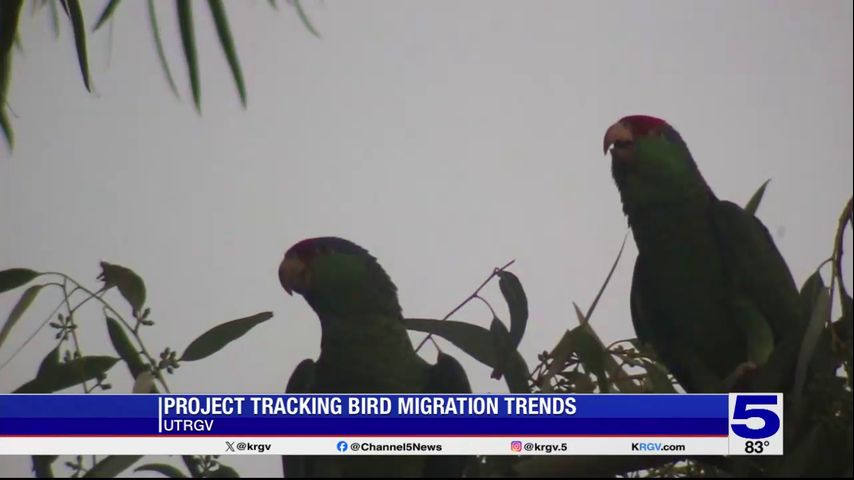
For fifteen years, a University of Texas Rio Grande Valley professor has been working on a bird migration project.
It's all to find out where birds in the Rio Grande Valley migrate from.
UTRGV professor Andrea Contina and his colleagues have collected 8,000 bird feathers over 15 years.
"It is a team effort. It is my effort for sure, I've been putting things together and the samples together, but it is also building a network of collaborators," Contina said.
Each feather carries clues about bird migration and the environment.
Contina's goal is to find out whether the same birds continue to migrate to the Valley year after year.
By safely catching and banding the birds, he can track their movements and learn which species are returning.
Over the years, he's discovered that some of the same birds come back every migration season, a sign of how connected they are to the Valley.
Contina says this project is more than just about determining migration patterns, it's about learning if certain bird species might carry diseases.
"If we learn about the evolution of avian migration to know where these birds are coming from, then we can also know these hotspots of these diseases, which is another reason why it is important to study them," Contina said.
His research also shows a new pattern emerging.
"We are seeing some trends where, in some years, birds are eating more insects than plants. Now, why is that? Is that because that is the food that is available before migration season, so they eat what they can?" Contina said.
This trend could reflect a shift in food availability before migration.
"I knew if I kept going, I would get to the point where I would have the data set that I needed to really address and answer these questions that a lot of people were wondering about," Contina said.
Contina's long-term goal is to track migration trends over 30 to 40 years. He calls the project a lifetime commitment, one he plans to continue for as long as possible.
"Having that goal gave me the motivation," Contina said.
Watch the video above for the full story.
More News