Texas schools say they still face budget difficulties despite $8.5 billion boost
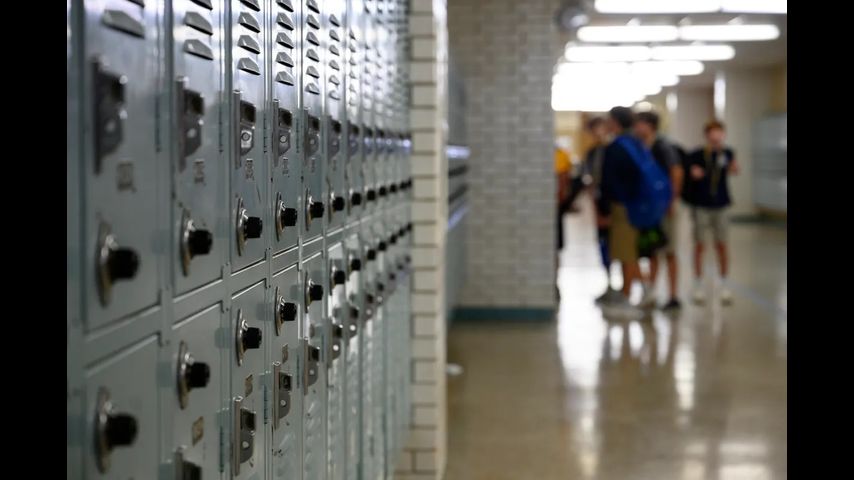
The influx of nearly $8.5 billion to Texas schools last year was not enough to stop schools from making tough budget cuts, district officials told state lawmakers during a Capitol hearing Monday.
School leaders across Texas have already had to eliminate jobs and close campuses because of financial pressure. The El Paso district, for example, faces a nearly $53 million budget shortfall and may soon declare a financial emergency, while the Crystal City district in South Texas recently told families that it has less than $500 in its bank account.
At a House Public Education Committee hearing on Monday, school officials said they were still plagued by financial pressure even after the Legislature provided schools with new money for teacher pay, educator training and special education in the largest one-time public education investment in recent memory.
As part of House Bill 2, school districts like Navarro ISD saw an increase in their base funding, or basic allotment, by just $55 per student. Paul Neuhoff, chief financial officer at Navarro ISD, urged state lawmakers to grow that pot of money, which the district counts on to keep up with the cost of school facilities, staff benefits and transportation. The nearly $300,00 the Navarro ISD received in total base funding fell short, Neuhoff said.
“This is an essential help that we need,” Neuhoff told lawmakers. “Our utilities have increased close to 60% since 2019, [teacher retirement] payments have gone up 62% since 2021. … The average cost per mile operating our buses was $3.90 a mile, and that's before the now-spike that we have in diesel prices.”
HB 2 also increased teacher pay based on years of experience and districts' enrollment, and it expanded Texas’ pay-for-performance system, allowing more teachers to qualify for raises.
Alejos Salazar Jr., superintendent of Lasara ISD, said he has tried to get extra pay into the pockets of support staff like librarians and school nurses by scheduling them to teach part-time.
“The librarian, for example, we make sure that she's got classes scheduled half the day, so we can make sure that we can tap into that money for her,” Salazar said. “Because if we don’t … then other people, other sectors of your employment group are left out .. and we value all of them.”
Even with the financial investments from HB 2, Salazar is, for example, still struggling to find money to fix issues as small as scoreboards on baseball and football fields.
“I can't sit here and say that with the certain funding that we receive, we're doing great, because we aren't,” Salazar said. “We live, figuratively speaking, paycheck to paycheck.”
The financial crises school districts are facing are in large part due to declining enrollment, triggered by low birth rates, more schooling options and fears regarding immigration enforcement. Public schools receive funding based on attendance, meaning they receive less money if fewer students show up to class. Experts expect those enrollment numbers to continue to decline after lawmakers greenlit education savings accounts, often called vouchers, that allow families to use taxpayer funds for private school or home schooling. Inconsistent funding from the Legislature has also played a role. Prior to the passage of HB 2, Texas students endured six years without their schools receiving comprehensive funding increases.
Also on Monday, TEA officials testified that the agency recently updated its hold-harmless calculations to prevent duplicate payments for the same revenue loss. The change resulted in an estimated $28 million decrease in funding across seven school districts, including Houston and Dallas ISDs, challenging districts that had already planned their budgets around earlier projections.
The comprehensive school funding package also included a clause requiring that districts phase out uncertified educators and provided financial incentives for teachers who go through high-quality training programs.
Lawmakers also approved significant changes to how Texas pays for special education. Starting next school year, districts will receive money for students with disabilities based on the needs of each child, as opposed to the classroom setting the school assigns them to.
The state now must reimburse districts $1,000 for each evaluation of a child suspected of having a disability, which can cost between $1,000 and $5,000 or more to complete. Districts completed about 178,000 evaluations last year, which means TEA is estimated to disperse about $178 million a year.
Public schools must also conduct and pay for the special education evaluations of families wanting to participate in the new voucher program if they request one.
Kami Finger, an assistant superintendent with Lubbock ISD, urged lawmakers Monday to reconsider the requirement to conduct evaluations for families interested in vouchers because of the additional workload it produces, especially to support children already in private school. Lubbock ISD taps its general fund to make up a $3.5 million shortfall in state special education funding, Finger said.
Texas’ voucher program launches next school year, which could result in additional funding losses if students leave their campuses for other options, public school officials have noted.
Legislative budget experts estimated that about 24,500 public school students would initially leave for private schools due to limited space. Of almost 96,000 students recently invited to join the voucher program, 57% previously attended a private school or home-school.
This article first appeared on The Texas Tribune.
More News