More green, less steel: Laredo proposes alternative border fencing for Rio Grande waterfront
Subscribe to The Y’all — a weekly dispatch about the people, places and policies defining Texas, produced by Texas Tribune journalists living in communities across the state.
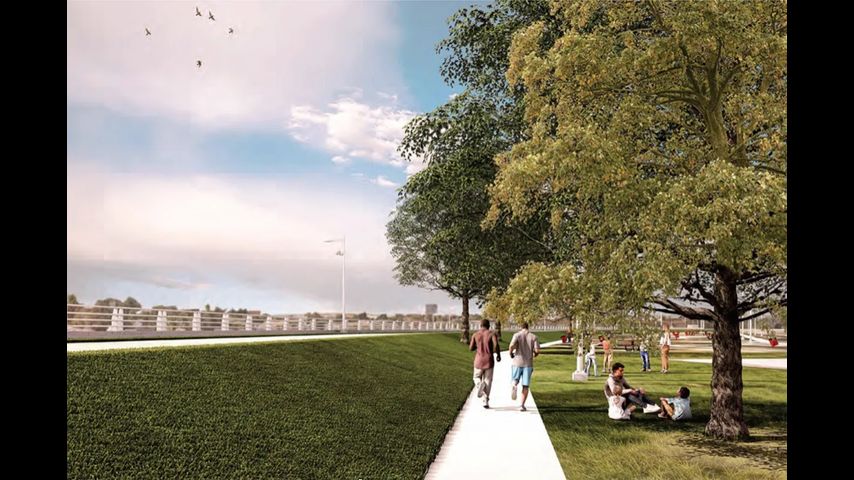
McALLEN — Laredo city officials unveiled designs for a proposed border wall in the city’s downtown riverfront area that has been among the areas targeted for border wall construction under the Trump administration. However, unlike a border wall that is planned or under construction, the barriers in the Laredo downtown area would not include the steel bollards that have been a staple of border wall construction. Instead, following months of negotiations, federal officials designed fencing that would be shorter, would be more aesthetically pleasing and would incorporate a green space for residents.
Renderings of the designs, which were provided by the U.S. Customs and Border Protection, show three different proposed designs for a riverfront border barrier — a guardrail, a steel fence and a chain-link fence. The barrier would be positioned just a few yards from the river on one side with a public recreational space on the other. The fencing would stretch from the Texas Mexican Railway International Bridge to the Juarez-Lincoln International Bridge.
The unveiling comes after city officials began engaging in discussions with federal officials in November. The city had received notice that President Donald Trump’s administration intended to move forward with plans to install barriers along the southern U.S.-Mexico border, which was a pillar of his immigration agenda during his first term in office.
Laredo Mayor Victor D. Treviño said the steel-bollard border barriers that have been constructed along the U.S.-Mexico border are intrusive and visually unappealing, so he and city officials worked with CBP and the Department of Homeland Security to develop a design that was more visually appealing while still serving the purpose of border security.
“We've had conversations with the Border Patrol and dialogue and presenting them with what would be best for our city and the community,” Treviño said.
Conversations between the city and the federal government remain ongoing, Treviño said, and a CBP spokesperson confirmed the agency is still finalizing the design for the border barrier, which will sit adjacent to Laredo’s downtown business district.
The Trump administration has been ramping up efforts to construct border barriers through funding secured under Trump’s signature spending bill, the One Big, Beautiful Bill. The funds directed CBP to construct a border barrier system, or a “Smart Wall,” that would consist of floating buoys placed in the Rio Grande, surveillance technology, patrol roads and bollard walls.
Those plans have faced strong resistance in places like West Texas where advocates have sued the Trump administration, accusing the government of bypassing environmental laws to build a border barrier in the Big Bend area.
In January, the Trump administration announced plans to install more than 500 miles of buoys along the river, starting in the southeast corner of Texas in Brownsville.
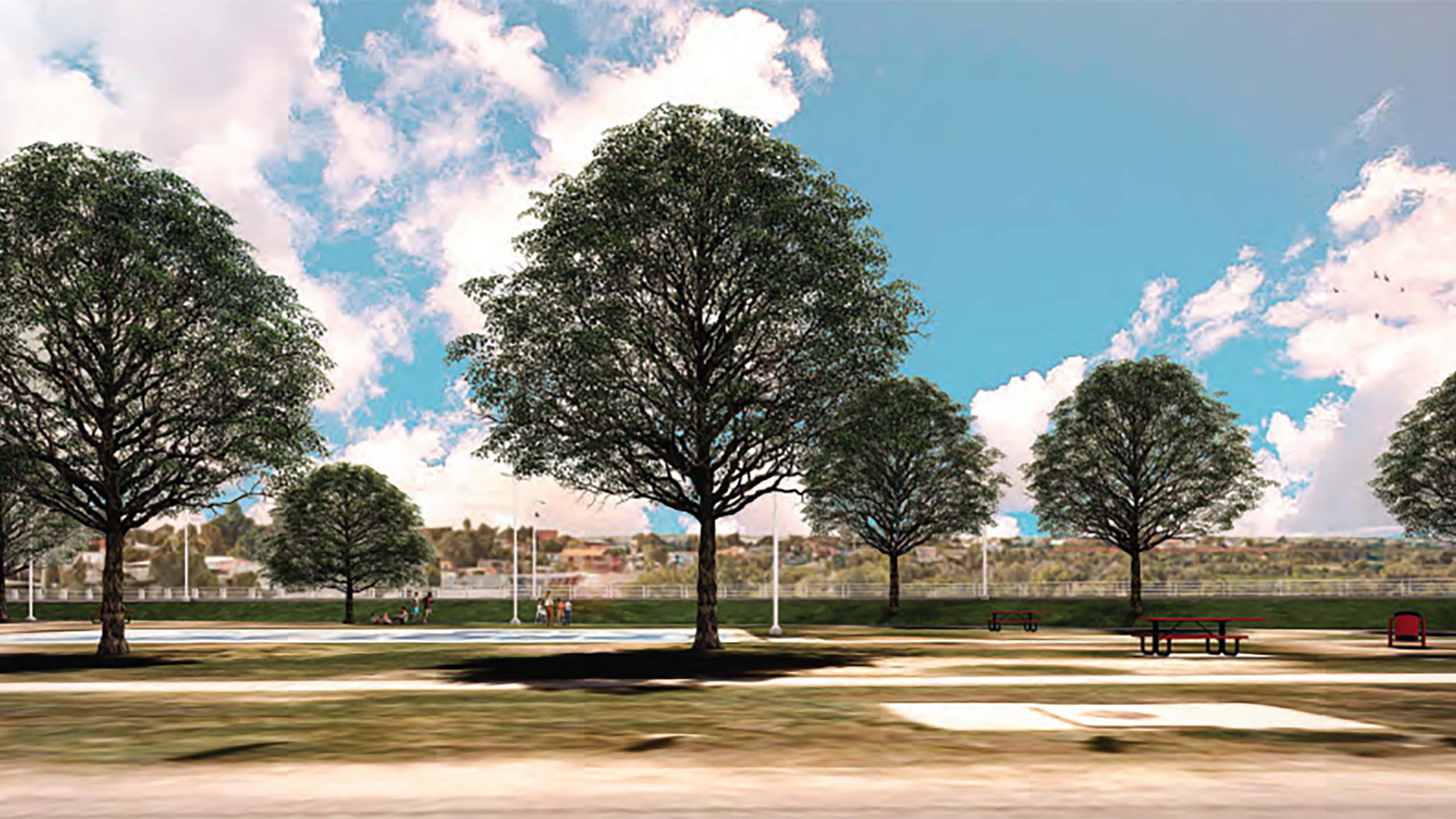
CBP did not respond to questions about why the agency opted to design barriers without steel bollards in the Laredo downtown area. However, Laredo officials have long tried to ensure that any border wall construction in the downtown area could double as a recreational space.
During Trump’s first term, city leaders pushed for a riverfront development project that incorporated green space, a promenade and flood protection while also fulfilling the federal government’s border security efforts.
The risk of flooding with steel bollards was a particular concern for city officials because the vertical steel posts could become clogged with debris and obstruct the movement of water. The border fencing, as proposed in the three new renderings, do not pose that risk, the city said.
As part of the city’s negotiations with CBP, the border wall will no longer cut through a city-owned golf course, the riverside Max A. Mandel Municipal Golf Course, nor impact the city’s wastewater treatment plant as originally proposed.
The federal government has awarded multiple contracts for the construction of its “Smart Wall” in Laredo. CBP and DHS awarded a $440 million contract to Fisher Sand & Gavel, an Arizona-based company, to build approximately 15 miles of primary border wall and about 16 miles of waterborne barrier. The company also received a second $300 million contract for an additional 50 miles of waterborne barrier system in the Laredo sector.
Texas-based SLSCO Ltd. received a $665 million contract to construct approximately 41 miles of border wall in the Laredo sector. The company, which has also been contracted to build the Florida detention center known as “Alligator Alcatraz,” came under scrutiny after two of the company’s security contractors sued the company in 2020. The contractors accused the company of hiring armed Mexican nationals as security guards who were later involved in a shootout. The contractors voluntarily dropped the lawsuit.
Reporting in the Rio Grande Valley is supported in part by the Methodist Healthcare Ministries of South Texas, Inc.
This article first appeared on The Texas Tribune.
More News