Valley veteran shares how he handles Fourth of July noise
Saturday is Independence Day, and it's the time of year when fireworks fill the sky.
For most of us, the Fourth of July is a day to celebrate with family, food, and fireworks. But for some veterans, it can be stressful.
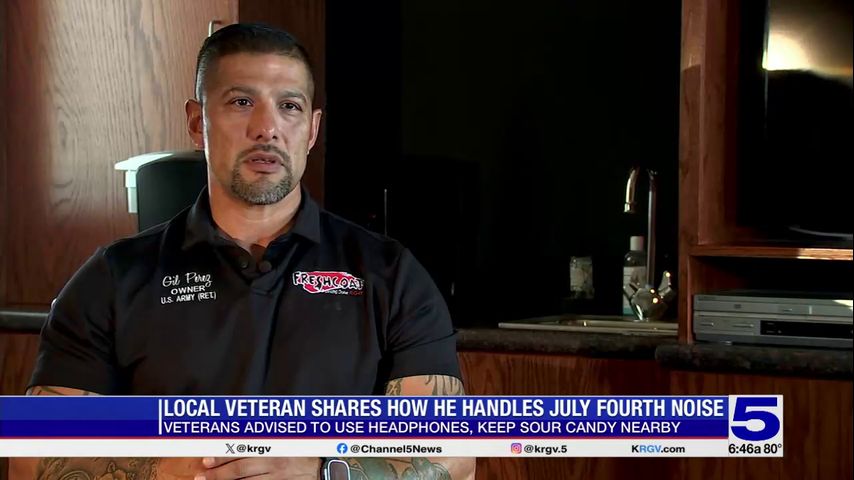
"If it is out of nowhere, loud bangs, something, it does jolt me, it does have an effect," U.S. Army veteran Gil Perez said.
Perez served in the U.S. Army for 20 years. He noticed symptoms of post-traumatic stress disorder after his first deployment in 2005.
Unexpected loud noises would trigger him.
"It does bring back kind of those memories when you were deployed in the war zone; those things do tend to come back," Perez said.
To help in those stressful situations, Perez uses grounding techniques to stay calm.
"You do have to remember that it is okay that you are safe and everything is fine. Take some deep breaths, just kind of walk around, that's what I do if I need to. It helps me to relax," Perez said.
For veterans suffering from PTSD, healthcare providers suggest avoiding fireworks if possible.
If you do decide to go to a city event, know your triggers and go with someone that can help you stay calm.
"You can have somebody that's really a source of comfort, a spouse or maybe a parent that just reminds you that everything's okay and that you are safe," South Texas Health System licensed clinical social worker Bob Cooper said.
Cooper says other tips he offers to patients are noise-cancelling headphones and sour candy.
"Because sometimes when people have a traumatic experience, start to have discomfort that can affect the senses, that can take them out of that situation, and so sour candy might be a good idea," Cooper said.
Cooper says anyone suffering from PTSD should avoid areas with fireworks and try to find a quiet room to stay relaxed.
Perez urges all veterans to take their symptoms seriously. He wants them to remember they are not alone and if they need help, find it.
"Always seek help. I mean, that's the biggest thing. It's always going to be one of the things that you should do, seek help from a professional," Perez said.
Any veteran suffering from a mental health crisis can call 988, 24 hours a day, seven days a week. Calls are confidential and will offer crisis support for veterans and their loved ones.
More News