Texas took their licenses. Now these immigrant truckers face lost livelihoods, sense of betrayal

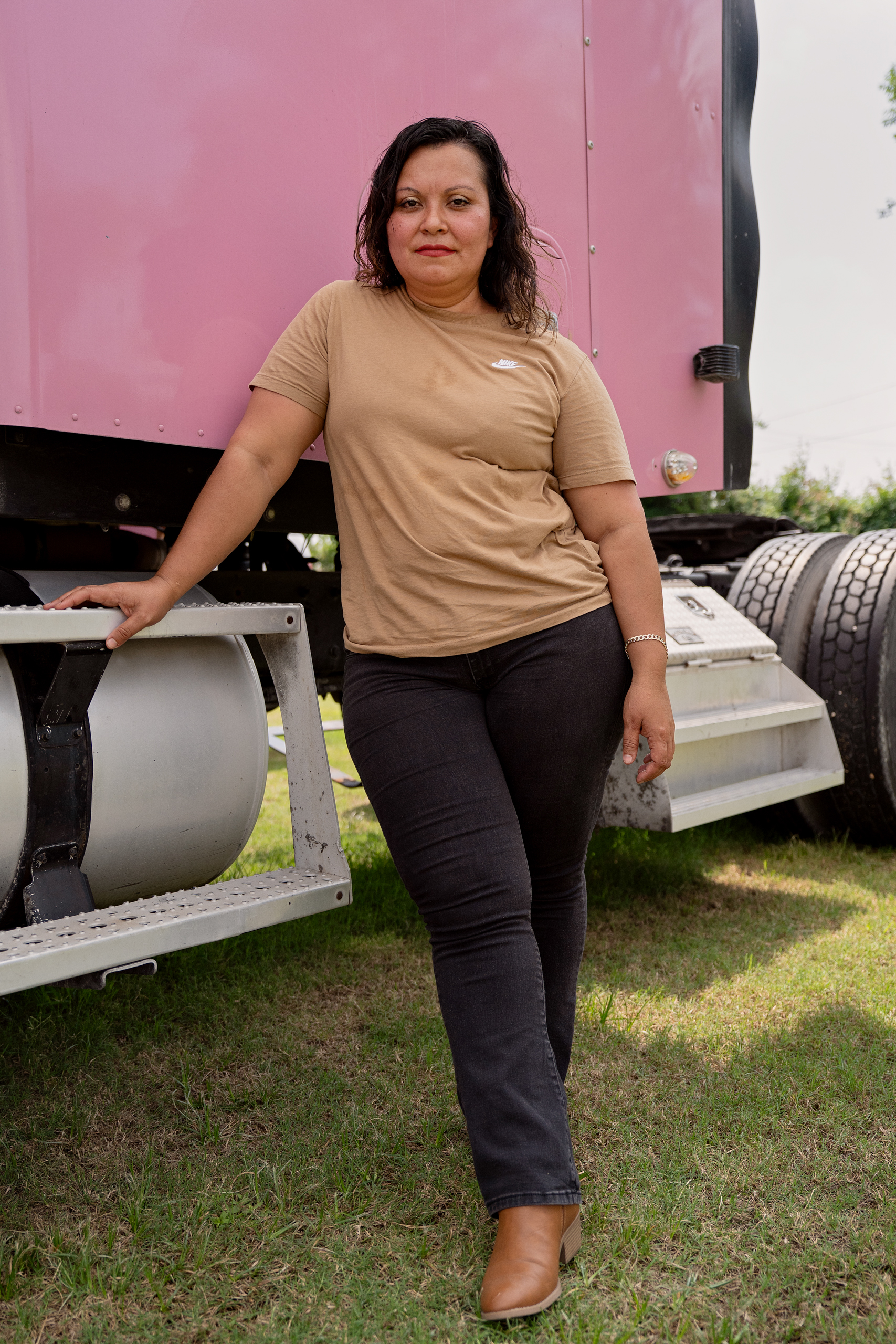
Veronica Viera loved watching Texas unfold from the driver’s seat of her bright pink 18-wheeler — the winding roads, the small towns, the sense of freedom — so losing her license in a government crackdown on legal immigrants was devastating.
No more trips to and from Houston, listening to pop and Christian music.
No more hauling whiskey from Laredo, tangerines from Brownsville, solar panels to the Hill Country.
No paycheck.
Viera’s life abruptly changed when Texas, following the dictates of the Trump administration, canceled commercial driver’s licenses, or CDLs, held by legally present noncitizens, including asylum seekers, refugees and DACA recipients. Texas was one of the first states to take action.
She heard about the cancellations in December as men unloaded office chairs she’d hauled to San Antonio in the beloved semi she named Pink Panther.
Viera, a 40-year-old DACA recipient who moved to Houston from Guatemala when she was 9, hurriedly checked her status online, fingers trembling as the page loaded on her phone. Her stomach dropped. She’d lost her CDL a week before.
Can I drive back to Houston? What should I tell my boss?
Bigger questions followed.
Did my husband also lose his trucking job? How am I going to pay for my son’s tuition?


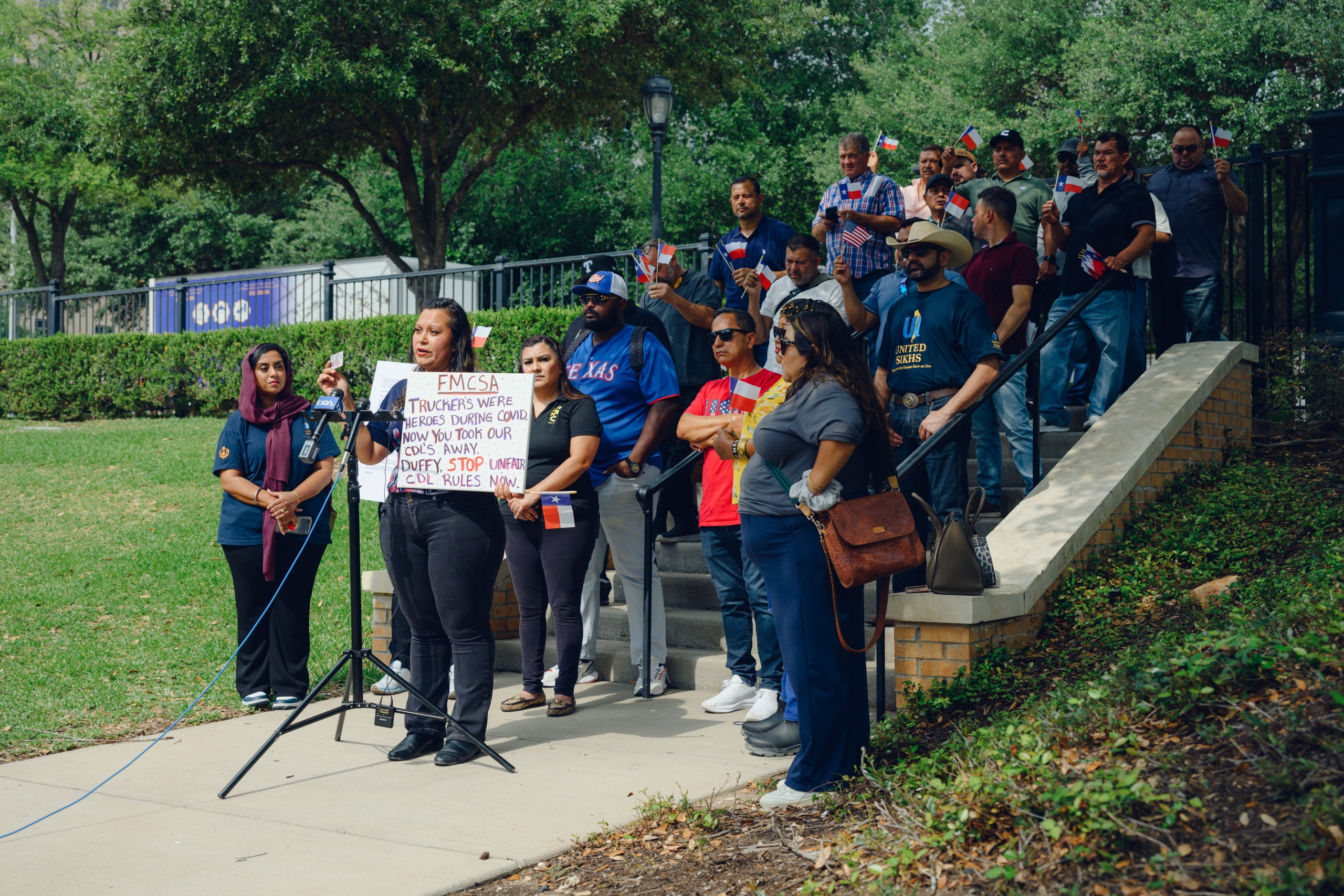
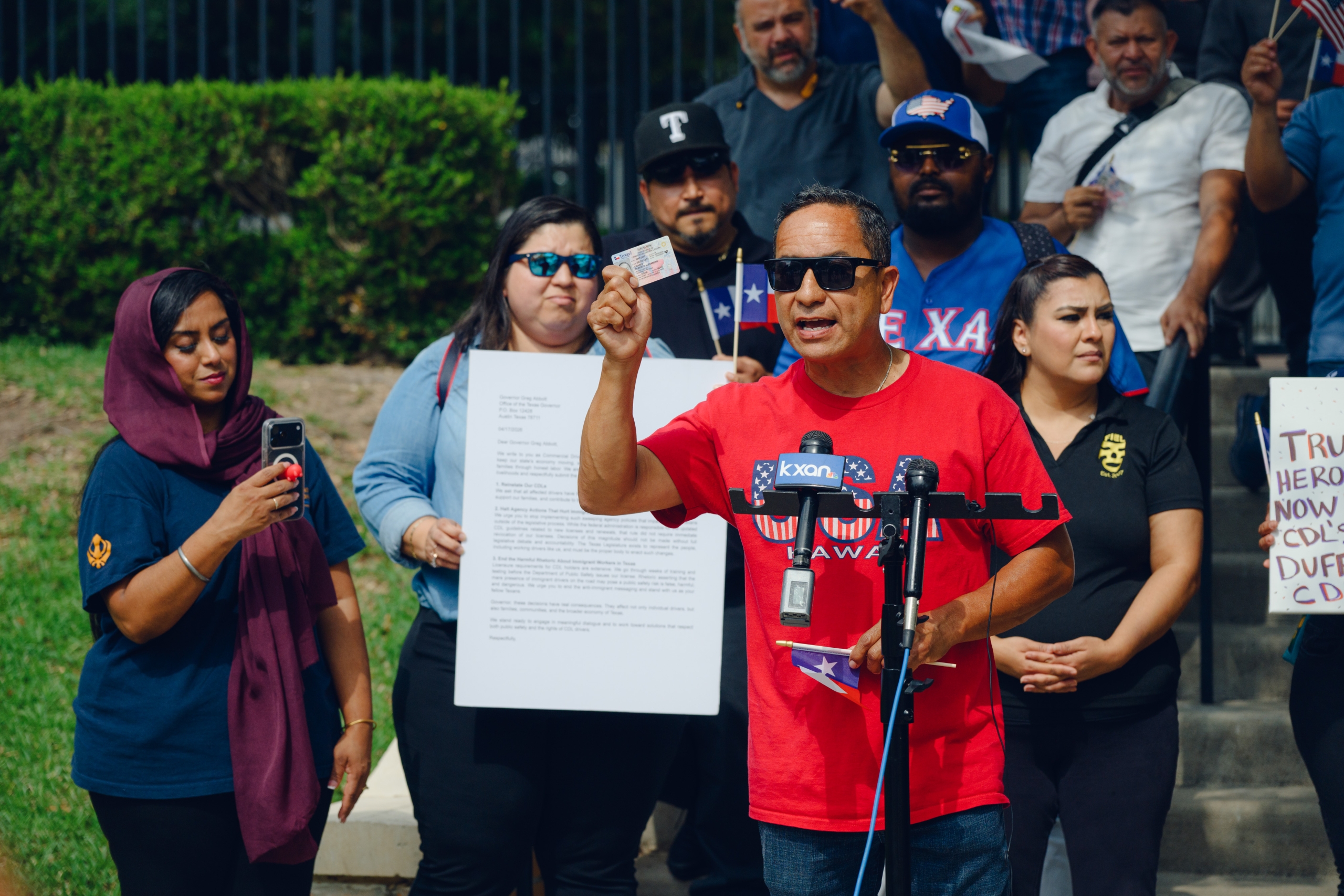
Noncitizen truckers and bus drivers have increasingly been targeted by “America first” Republicans who say correcting poor state oversight of immigrant drivers and removing non-English speakers from the roads would improve public safety.
“Licenses to operate a massive, 80,000-pound truck are being issued to dangerous foreign drivers – often times illegally,” U.S. Transportation Secretary Sean P. Duffy said in September when he directed states to crack down on noncitizen CDLs. “This is a direct threat to the safety of every family on the road, and I won’t stand for it.”
Four days later, the Texas Department of Public Safety announced that it would no longer issue or renew “nondomiciled CDLs” — licenses given to noncitizens who are in the country legally.
DPS began canceling previously issued nondomiciled CDLs in December, with 6,407 licenses revoked and more than 3,300 that once expired will be evaluated for “renewal eligibility under the new rule change,” the agency said.
Texas officials continue to turn up the heat. House Speaker Dustin Burrows, R-Lubbock, recently directed legislators to study whether noncitizen CDL holders cause an increase in accidents, followed by recommendations “to protect public safety.” Lt. Gov. Dan Patrick directed senators to strengthen safety standards for trucking schools and beef up enforcement of English-language requirements. Attorney General Ken Paxton in late April began probing five Texas trucking schools, accusing them of endangering Texans by certifying drivers who were not proficient in English.
For Gov. Greg Abbott, English proficiency requirements make sense. “Every commercial driver license operator on Texas roadways must be able to communicate clearly in English to ensure compliance with traffic laws, follow safety directions, and prevent accidents,” he said.
These safety concerns confuse Viera, who speaks and understands English well, attended middle and high schools in the Houston area, earned her CDL at Houston City College and says she has a “sparkly clean record.”
“Just because I’m not a U.S. citizen, does that make me a dangerous driver?” Viera said. “I know a lot of U.S. citizens who have had reckless driving incidents.”
Bhupinder Kaur, director of operations at international humanitarian nonprofit UNITED SIKHS, said the policy “has no basis on safety, it is basically just targeting immigrant communities.”
Lawsuits challenging CDL revocations have been filed in several states, including a California petition — filed by lawyers with the Sikh Coalition and Asian Law Caucus — arguing that about 20,000 licenses were canceled without proper notice or the opportunity to be heard.
In Florida, a federal lawsuit by 19 truck and bus drivers seeks to block new state rules, arguing they violate the rights of drivers who face “financial ruin” without evidence of misconduct, fault or dangerousness.
Last week, the U.S. Court of Appeals for the District of Columbia denied a request to block federal CDL rules while two other legal challenges continue.
“Am I just having a bad dream?"
After learning her CDL was canceled, Viera phoned her 19-year-old son Alex, the eldest of four. With tears falling, she asked, "Am I reading this right or am I just having a bad dream?" He started crying, too.
Before hanging up, her son decided to drop out of flight school after a year, abandoning a dream of earning a commercial pilot’s license because tuition costs were too high. His mom picked him up in Florida and drove him home.
Viera said she “felt like a loser” watching her son, who loves being in the sky, pack up his dorm.
“If it wasn't for my status, he wouldn’t be going through this,” she said. “He doesn’t deserve going through this because he's a U.S. citizen.”
To help his family, but against his mom’s wishes, Alex enlisted in the Air Force.
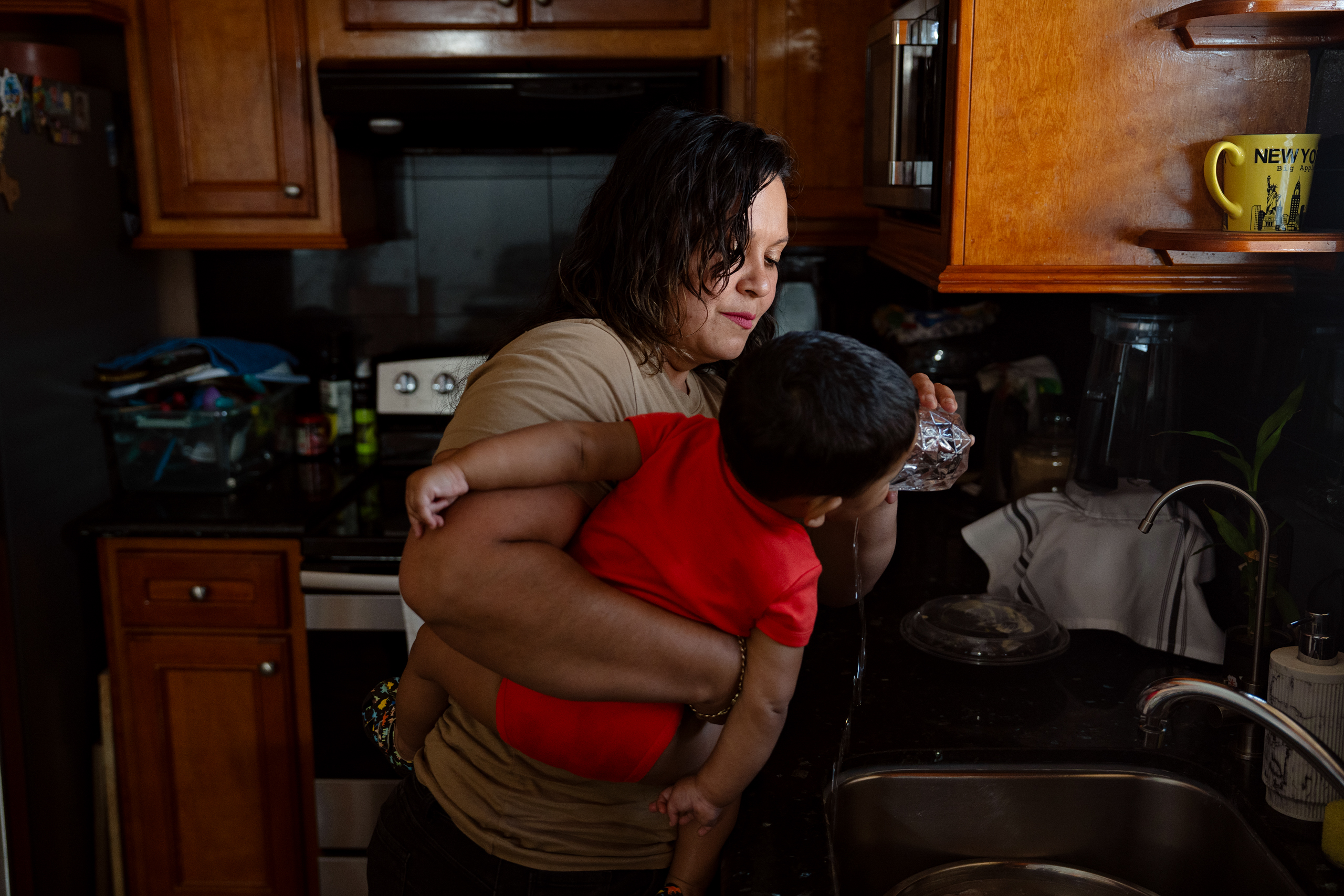
Viera’s youngest turned 1 in April. Her husband also lost his job as a truck driver in December but found a new gig as a diesel mechanic, though the family struggles to make ends meet.
They sold two of their semi trucks, but Viera is holding tight to Pink Panther.
She feels betrayed by the state she’s traveled extensively and gotten to know so well.
“I feel like a Texan, like a real Texan,” Viera said. “I mean, I’ve seen and driven through so much of the state, much more than most people.”
“You become addicted to the job”
For some drivers, playing a vital role in the state’s economy is alluring.
“It's a fulfilling job because at the end of the day, you’re very tired and you feel like you have done good for the economy and you have added to making Texas better,” said Eunice Kamanu, a nine-year truck driver based in Fort Worth before her CDL was recently rescinded. “You become addicted to the job.”
Kamanu said she always dreamed of being a trucker, long before immigrating to Texas from Kenya in 2010 as an asylum seeker. Most of her deliveries brought sand to drilling sites for fracking, taking her to the state’s most remote areas — her favorite assignments.
“I really enjoy being out in the dust, wearing boots,” said Kamanu, 51.
To make ends meet after losing her job, she started working as an Uber driver, a transition made by many other former truck drivers, including Viera. But her income was slashed by about 75% — not enough to support her five kids. Her mom and siblings also depend on her.
“We work so hard,” Kamanu said. “We try so much to be on the right side of things and work hard to provide for our families. I feel like it's very, very unfair after all I have done and accomplished.”
Across the nation, as many as 200,000 immigrant drivers could be pushed out of the trucking industry by the CDL crackdown, according to the Department of Transportation — even as the U.S. faces a shortage of up to 80,000 truck drivers.
Madhav Pappu, a clinical associate professor at Texas A&M’s business school who focuses on transportation and supply chain management, said the compounding labor challenge is one factor contributing to higher freight rates — costs that may be passed on to consumers.
Losing drivers could also devastate small businesses, Pappu added.
“When you pull these drivers off the highway, what's going to happen to the fleet?” he said. “Some of the smaller companies can’t afford to have these trucks sitting on the side, and that leads to a disproportionate amount of smaller companies either closing their doors or being absorbed by some of the larger ones.”
On the other hand, John Esparza, president and CEO of the Texas Trucking Association, said he doesn’t think the crackdown on noncitizen truckers will have a major impact on his industry because they make up “a relatively small number” of drivers in the state. There were nearly 724,000 active CDLs in Texas as of late April, DPS said.
“The industry's really grown accustomed to being really resilient and challenged on a daily basis from a number of obstacles that can come up,” Esparza said.
A DPS spokesman said Texas drivers were notified that their nondomiciled CDLs had been canceled. None of the four truckers who spoke to The Texas Tribune, however, said they had received notice, including Viera, Kamanu and Roberto Linares, 52, who has been driving for nearly two decades but learned his CDL was rescinded weeks after the fact.
“I went to work and I told my manager what's going on — they couldn’t believe it, they didn’t even know either,” said Linares, who lives in Mansfield, a small city near Arlington, under temporary protective status from El Salvador.
He’s now making about $600 a week as a yard helper, and his 13-year-old daughter had to quit her school soccer club because uniforms and other dues are too expensive.
“It feels like someone stole something from you,” said Linares, who said he has been driving trucks for decades. “But I have faith that the government is going to make an exception for us drivers who were doing everything right.”
“They cut my wings”
The Texas crackdown on noncitizen CDLs has also strained trucking schools.
Oaty Don Scott, who owns and runs Trucker Certified CDL, said class sizes have shrunk at his online school, where about 10% of students were legal noncitizens.
Trucker Certified CDL was among the five schools being investigated by the attorney general’s office for allegedly certifying unqualified and non-English speaking drivers.
Scott said trucking school is rigorous and safety is the core of all instruction. Every student at his school has been proficient at speaking and reading English, he said.
Zachary Delgado, owner of Fast Track CDL, which is also under investigation by Paxton’s agency, said graduates still have to pass a test with DPS to get a CDL. “I’m 100% confident in our business. We don’t do anything illegally,” he said.
Owners of four of the five schools under investigation responded to questions from the Tribune, and all defended their practices, including three who said they hadn’t received any direct communication from the attorney general’s office before Paxton announced the probe in a press release.
“I didn't learn about the investigation until I got the email from you,” Delgado said.
CDL courses in Texas can range from $2,000 at a community college to an average of $5,000 at a private school, according to Get CDL Texas, an online resource for drivers.
Rina Flores, a school bus driver in Houston, said she invested thousands of dollars in trucking school after immigrating from El Salvador 19 years ago to provide a better life for her two daughters.
As a bus driver for Lamar ISD in Harris County, Flores said she carried the most important cargo: children.

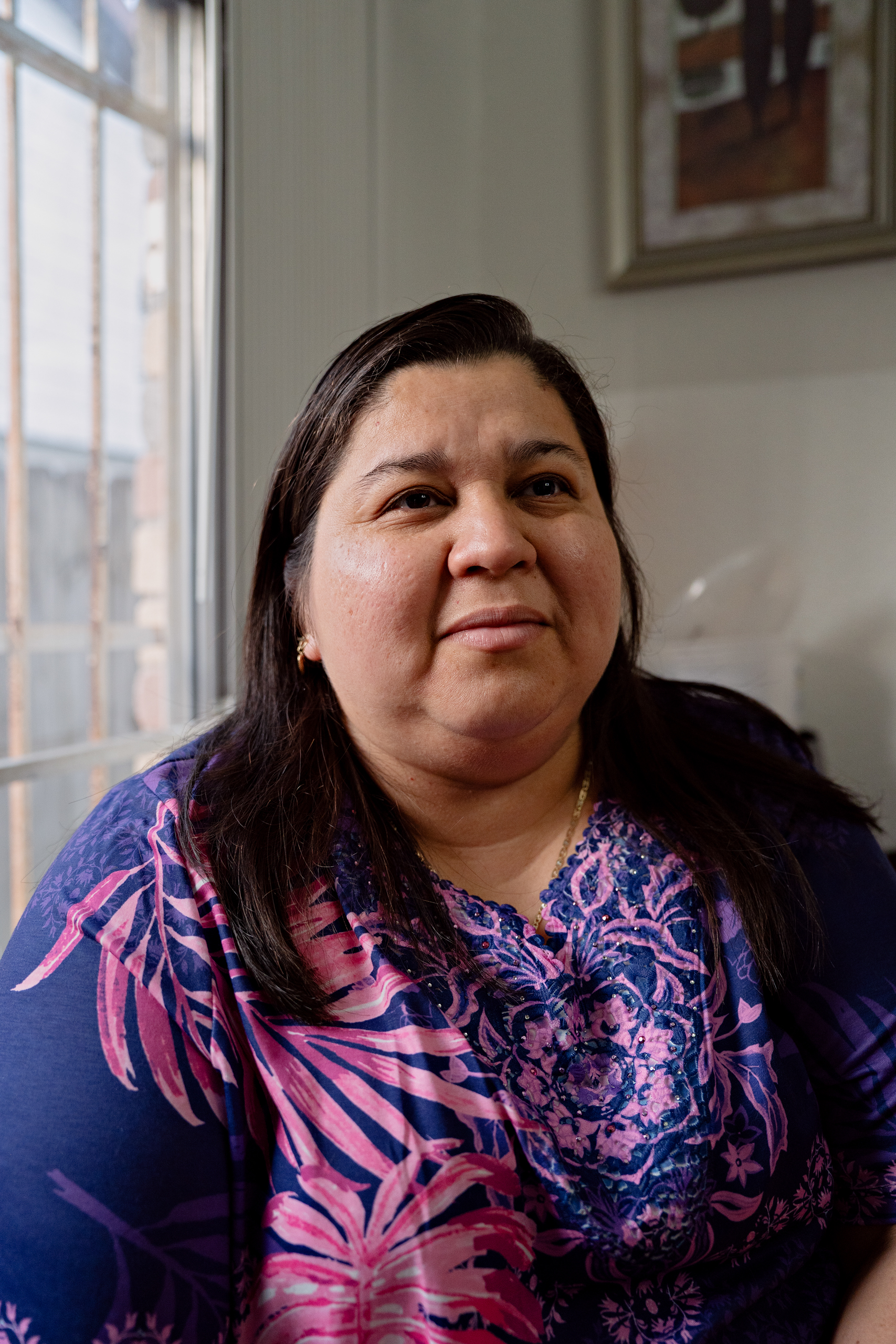

“When you pick up the student, you are the first face they see,” she said. “So the best attitude as a bus driver: you smile, you say good morning, you say, ‘I am here for you. If you need anything, raise your hand or call my name. I will listen to you.’”
She said losing her CDL in December felt “like they cut my wings.”
Flores’ adorned her bus with stickers bearing words of encouragement, including: “Everyone is welcome. Everyone belongs” and “Believe in yourself.”
Another says: “In a world where you can be anything, be kind.”
When Flores lost her job, she left the stickers on bus No. 5023, figuring the kids could still benefit from the messages.
Coworkers also encouraged her to leave them up in hopes she can return to work. In the meantime, she’s working in an office and misses her students.
Disclosure: Houston City College has been a financial supporter of The Texas Tribune, a nonprofit, nonpartisan news organization that is funded in part by donations from members, foundations and corporate sponsors. Financial supporters play no role in the Tribune's journalism. Find a complete list of them here.
This article first appeared on The Texas Tribune.
More News